Top Best 3D Printing Methods For Industrial Prototyping Revealed
Additive manufacturing technologies such as selective laser sintering (SLS), fused deposition modeling (FDM), and stereolithography (SLA) have revolutionized the landscape of industrial prototyping by enabling rapid production of complex geometries with precision and material efficiency. As industries increasingly rely on iterative design and functional testing, selecting the best 3D printing methods for industrial prototyping becomes critical to optimizing performance, cost, and scalability.
Each technique offers distinct advantages in terms of resolution, material compatibility, and mechanical properties, impacting how prototypes translate into viable final products. Navigating these options requires a deep understanding of both technical capabilities and project-specific requirements. This article delves into the leading 3D printing processes tailored for industrial prototyping, revealing key insights that could transform your approach to product development.
Exploring Top Techniques Revolutionizing Industrial Prototype Development
| Image | Product | Price |
|---|---|---|
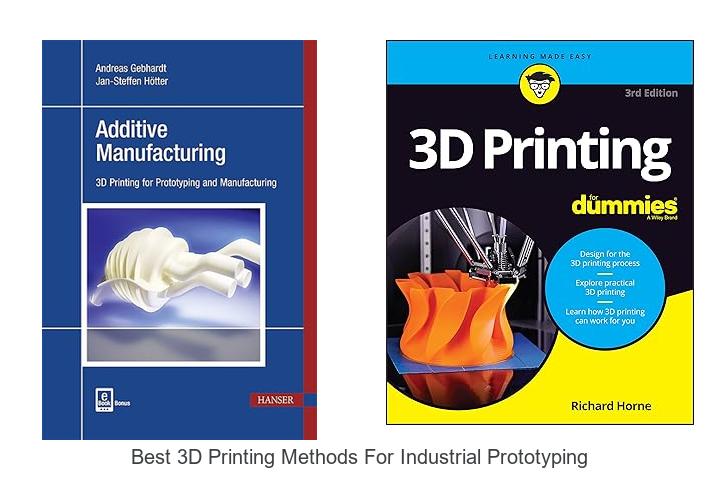
Our Pick 1  | Additive Manufacturing: 3D Printing for Prototyping and Manufacturing | Check Price On Amazon |
Our Pick 2  | 3D Printing For Dummies | Check Price On Amazon |
Our Pick 3  | 3D Printing for Product Designers: Innovative Strategies Using Additive Manufacturing | Check Price On Amazon |
1. Additive Manufacturing: 3D Printing for Prototyping and Manufacturing
Unlock the full potential of industrial prototyping with Additive Manufacturing: 3D Printing for Prototyping and Manufacturing, a comprehensive guide that dives deeply into the technical facets and applications of additive manufacturing. Ideal for professionals seeking advanced knowledge on the best 3D printing methods for industrial prototyping.
This authoritative volume explores a wide array of additive manufacturing processes, including stereolithography and laser beam melting, while addressing both rapid prototyping and direct manufacturing. The book offers detailed explanations of the underlying physical and chemical phenomena, combined with insights into digital pre-processing, tooling, and emerging industrial applications.
Pros
- Extensive coverage of additive manufacturing technologies and their industrial applications.
- In-depth explanations of physical, chemical, and digital processes involved in 3D printing.
- Includes strategic, economic, safety, and environmental considerations alongside technical content.
Cons
- Some technical inaccuracies and outdated references may require cross-referencing with newer sources.
While slightly higher in price compared to other texts, this book stands out for its thorough and multidisciplinary approach to additive manufacturing, making it a valuable resource for engineering professionals and researchers eager to master the best 3D printing methods for industrial prototyping and manufacturing.
2. 3D Printing For Dummies
Discover the essentials of 3D printing with 3D Printing For Dummies, the perfect guide for beginners and enthusiasts exploring the best 3d printing methods for industrial prototyping. This approachable handbook simplifies complex concepts to quickly get you up to speed in the world of additive manufacturing.
Covering key techniques, material choices, and troubleshooting tips, this book offers practical insights that enhance your understanding of 3D printing technology. Whether you’re prototyping professionally or for personal projects, it delivers clear instructions to optimize your printing outcomes.
Pros
- Easy-to-follow explanations ideal for beginners and hobbyists
- Comprehensive coverage of 3D printing processes and materials
- Provides helpful tips that improve printing quality and efficiency
Cons
- Limited depth for advanced industrial prototyping professionals
For buyers seeking an accessible introduction to 3D printing, 3D Printing For Dummies is a valuable resource that balances clarity with essential technical information at an affordable price. Compared to more technical manuals, it offers a friendly starting point without overwhelming jargon.
3. 3D Printing for Product Designers: Innovative Strategies Using Additive Manufacturing
Discover the transformative potential of additive manufacturing with 3D Printing for Product Designers: Innovative Strategies Using Additive Manufacturing. Perfectly tailored for industrial prototyping, this guide unlocks advanced 3D printing techniques to elevate product design and streamline development processes.
Featuring comprehensive insights into the best 3D printing methods for industrial prototyping, this book offers detailed strategies and practical applications for designers. It combines technical depth with innovative approaches, making it a vital resource for professionals seeking to harness the full capabilities of additive manufacturing.
Pros
- In-depth coverage of cutting-edge 3D printing technologies tailored for industrial use.
- Clear explanation of design-to-production workflows enhancing prototyping efficiency.
- Valuable resource for both beginners and experienced industrial designers alike.
Cons
- Price may be higher compared to some introductory additive manufacturing guides.
Offering a wealth of practical knowledge and innovative strategies, this book stands out as a definitive guide for mastering 3D printing in industrial prototyping. While the investment is on the higher side, the depth and quality of information make it a worthwhile addition to any product designer’s library.
4. Principles Of Additive Manufacturing And Industrial 3D Printing: Comprehensive Insights,

Unlock the potential of cutting-edge additive manufacturing with Principles Of Additive Manufacturing And Industrial 3D Printing: Comprehensive Insights. This essential guide dives deep into the best 3D printing methods for industrial prototyping, providing professionals and enthusiasts with an authoritative resource on modern manufacturing technologies.
Explore detailed explanations of various 3D printing techniques, their applications in industry, and the principles that govern successful prototyping. Featuring expert analysis, the book equips readers with knowledge to optimize manufacturing workflows and accelerate product development cycles.
Pros
- Comprehensive coverage of industrial 3D printing technologies tailored for prototyping.
- Clear insights into material selection, process optimization, and design considerations.
- Useful for both beginners and experienced professionals aiming to enhance manufacturing efficiency.
Cons
- Price point may be higher compared to introductory-level 3D printing books.
For those serious about mastering the best 3D printing methods in industrial prototyping, this publication serves as an invaluable tool, delivering expert knowledge that sets it apart from more general guides.
5. 3D PRINTING The Definitive Handbook ~ UPDATED & EXPANDED ~:

Unlock the full potential of industrial prototyping with 3D PRINTING The Definitive Handbook ~ UPDATED & EXPANDED ~. This expertly crafted guide provides essential insights into the best 3d printing methods for industrial prototyping, making complex concepts accessible for beginners and professionals alike.
Covering both filament and resin printers in detail, the handbook demystifies technical jargon and highlights critical distinctions between various 3D printing technologies. The updated edition enhances understanding for those seeking to optimize prototyping workflows and avoid costly mistakes in equipment selection.
Pros
- Clear explanations of 3D printing terminology tailored for industrial applications.
- Comprehensive coverage of filament vs. resin printers to guide informed decision-making.
- Updated content reflecting the latest advancements in 3D printing technology.
Cons
- Lacks sufficient illustrations; more diagrams could improve comprehension.
Ideal for those new to 3D printing as well as industry professionals, this handbook delivers valuable knowledge to optimize prototyping strategies. While it may benefit from additional visuals, its depth of information makes it a standout resource compared to general 3D printing guides.
6. The 3D Printing Handbook: Technologies, design and applications
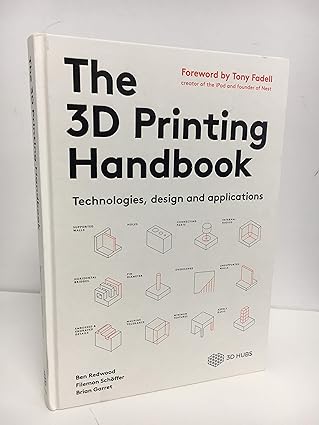
Unlock the full potential of industrial prototyping with The 3D Printing Handbook: Technologies, design and applications. This comprehensive guide dives into the best 3D printing methods for industrial use, delivering expert knowledge that empowers engineers and designers alike to innovate with confidence.
Covering a broad range of 3D printing technologies such as FDM (FFF), SLA, and DLP, this handbook balances detailed technical insights with practical design guidance. Learn about material considerations, design constraints, and ideal applications, making it an essential resource for mastering cutting-edge industrial prototyping techniques.
Pros
- Comprehensive overview of diverse 3D printing technologies beyond the common FDM/FFF
- Clear explanation of design considerations tailored to each printing method
- Practical application examples to help relate theory directly to industrial use cases
Cons
- May be dense for casual readers unfamiliar with technical terminology
As a well-structured and visually engaging resource, this handbook stands out as a valuable addition for professionals aiming to deepen their understanding of 3D printing’s industrial potential. Compared to other titles focusing narrowly on one technology, it delivers a balanced and actionable perspective for broader prototyping applications.
7. 3D Printing: Essential Techniques and Tips for Beginners (3D Printing

Unlock the full potential of your 3D printing journey with 3D Printing: Essential Techniques and Tips for Beginners. This comprehensive guide offers clear, focused insights, making it an ideal resource for novices aiming to master the best 3d printing methods for industrial prototyping and beyond.
The book breaks down complex concepts into understandable segments, covering everything from selecting the right 3D printer to troubleshooting common challenges. Its concise approach ensures readers gain practical knowledge without superfluous information, empowering them to navigate the 3D printing landscape confidently.
Pros
- Clear explanations tailored for beginners and intermediate users
- Detailed guidance on purchasing and handling 3D printers
- Focused troubleshooting tips without unnecessary filler content
Cons
- May lack advanced topics for experienced professionals
Offering practical, straightforward advice, this book stands out as an exceptional starting point for those eager to explore the best 3D printing methods for industrial prototyping. Its user-friendly style and focused content make it a worthy addition to any maker’s library.
8. Functional Design for 3D Printing: Designing 3d printed things for
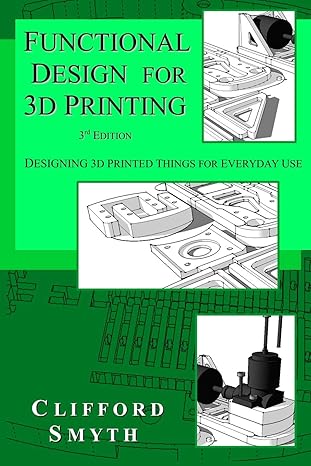
Discover the essential guide for mastering the intricate art of designing 3D printed parts with Functional Design for 3D Printing: Designing 3d printed things for. Ideal for engineers and designers aiming to optimize their prototypes using the best 3D printing methods for industrial prototyping.
This book offers clear, approachable insights into Fused Filament Fabrication (FFF) design, complete with useful reference tables and data. Unlike technical manuals, it balances precision with accessibility, making it a practical resource for both beginners and experienced professionals focused on functional design rather than printer operation.
Pros
- Provides detailed design guidance specific to FFF 3D printing technology
- Includes concise reference tables and practical data for effective prototyping
- Written in an approachable style suitable for beginners and experts alike
Cons
- Does not cover operational aspects of 3D printers—supplementary resources required for machine-specific instructions
For those focusing on the design aspects of industrial prototyping, this book is a valuable addition, offering clarity and practical information that complements technical manuals like The Engineer’s Guide to 3D Printing. At an accessible price, it stands out as a top choice for enhancing 3D printed part functionality.
9. MASTERING 3D PRINTING WITH THE FLASHFORGE AD5X: The complete guide

Unlock the full potential of your FlashForge AD5X with expert insights from MASTERING 3D PRINTING WITH THE FLASHFORGE AD5X: The complete guide. Perfect for industrial prototyping, this comprehensive manual dives into advanced techniques that elevate your 3D printing projects with precision and efficiency.
Covering essential topics from setup to troubleshooting, the guide provides clear, step-by-step instructions enhanced by practical examples. Whether you’re refining prototypes or tackling complex prints, this book acts as a vital resource for mastering one of the best 3D printing methods for industrial prototyping.
Pros
- In-depth troubleshooting strategies that resolve common and complex printing issues.
- Comprehensive coverage of the FlashForge AD5X’s features to maximize output quality.
- Includes practical projects and examples to apply new skills immediately.
Cons
- Focused specifically on the FlashForge AD5X, limiting applicability to other printers.
This guide stands out among similar 3D printing manuals by offering detailed, user-tested advice tailored to industrial prototyping demands. For users seeking to optimize their FlashForge AD5X printing experience, it provides unmatched value at a competitive price point of $
10. 3D Printing: A practical and hands-on textbook for mastering 3D

Discover the comprehensive guide to mastering 3D printing technology with 3D Printing: A practical and hands-on textbook for mastering 3D. Ideal for industrial prototyping and beyond, this textbook simplifies complex concepts, making advanced 3D printing methods accessible to learners at all levels.
Featuring clear explanations, practical examples, and step-by-step instructions, this resource covers essential 3D printing techniques suitable for industrial prototyping. Its hands-on approach ensures readers gain real-world insights and a solid grasp of various printing methods, enhancing both theoretical knowledge and practical skills.
Pros
- Clear and systematic explanations ideal for beginners and intermediate users.
- Practical examples focusing on real industrial 3D printing scenarios.
- Step-by-step guidance facilitates hands-on learning and skill mastery.
Cons
- May require supplementary materials for advanced industrial applications beyond prototyping.
For individuals seeking a structured, practical, and insightful resource on the best 3D printing methods for industrial prototyping, this textbook stands out as an invaluable tool that bridges foundational theory with hands-on application.
Top 3D Printing Methods for Industrial Prototyping Success
Accuracy and surface finish
When considering the best 3d printing methods for industrial prototyping, it is essential to focus on the accuracy and surface finish as these factors greatly influence the quality and effectiveness of the final prototype. Different 3d printing techniques offer varying precision levels achievable with various methods, which can affect how closely the prototype matches the original design specifications.
However, even with advanced precision, the surface texture may still require additional postprocessing to enhance appearance or functional properties such as strength or wear resistance. Understanding these needs is crucial because they directly impact the prototype’s functionality and aesthetics, determining if it is suitable for visual presentation, fit testing, or functional evaluation.
By evaluating how each printing method handles accuracy and surface finish, buyers can select the process that best aligns with their project goals and budget constraints, ensuring the prototype fulfills its intended purpose effectively.
Speed and production volume
When considering Speed and production volume for the best 3d printing methods for industrial prototyping, it is important to understand how different technologies perform in terms of output efficiency. Some printing methods offer faster turnaround times, which can be crucial when rapid iterations are required during the development cycle.
For instance, certain techniques excel in producing prototypes quickly but may be better suited for low volume production due to lower scalability or material constraints. On the other hand, additive manufacturing processes designed for industrial applications often provide greater scalability, allowing firms to handle higher production volumes without compromising on detail or strength. Evaluating printing speed alongside the volume of prototypes needed will help determine whether a method is appropriate for a small batch runs or large scale prototyping efforts.
Balancing these factors ensures that manufacturers can meet project deadlines while managing costs effectively, making the choice of the right 3d printing method pivotal for successful industrial prototyping.
Understanding different 3d printing methods
When exploring the best 3d printing methods for industrial prototyping, it is important to recognize the variety of techniques available, each with unique strengths and limitations that suit different project needs. Common industrial 3d printing techniques include selective laser sintering, stereolithography, fused deposition modeling, and direct metal laser sintering. Selective laser sintering offers excellent material strength and complexity, making it ideal for functional prototypes, though it can be more expensive and time-consuming.
Stereolithography provides high precision and smooth surface finishes, which is advantageous for intricate designs and detailed parts but may have limited material options. Fused deposition modeling is known for affordability and ease of use, making it a popular choice for quick iterative prototypes, though it may lack the fine detail and strength of other methods.
Direct metal laser sintering stands out for producing robust metal parts suitable for highly durable prototypes, but this method requires specialized equipment and materials, increasing costs. Typical applications in prototyping range from testing form and fit to functional performance evaluations, depending on the chosen printing technology.
Material compatibility and requirements
When exploring material compatibility and requirements in the best 3d printing methods for industrial prototyping, it’s important to consider the variety of materials each technique supports and how their properties influence the final prototype. Common industrial 3d printing methods can handle a range of materials including thermoplastics, resins, metals, and composites, each offering unique benefits.
For instance, thermoplastics like ABS and PLA are widely used for functional prototypes due to their durability and relatively low cost, while metal printing methods such as selective laser melting allow for strong and heat-resistant parts suitable for rigorous testing. The material’s mechanical strength, flexibility, temperature resistance, and surface finish play crucial roles in determining which option best fits the prototype’s intended use. Additionally, cost implications vary significantly; standard plastics often provide a budget-friendly solution for early-stage models whereas advanced materials like titanium or specialized resins might raise expenses but deliver superior performance and precision.
Balancing these factors will help ensure the chosen 3d printing method aligns well with both the project’s technical requirements and budget constraints.
Cost factors and budget considerations
When exploring the best 3d printing methods for industrial prototyping, understanding cost factors and budget considerations is essential to making an informed decision. The initial investment and operational costs often vary significantly depending on the printing technology chosen, with some systems requiring a higher upfront expense but offering lower running costs in the long term.
Maintenance and material expenses also play a crucial role, as certain 3d printing methods demand specialized materials or frequent upkeep, which can add up over time. Balancing cost with prototype quality and turnaround time is key; while higher-end methods may deliver exceptional precision and faster results, more affordable options might suffice for simpler prototypes or early-stage designs. By carefully weighing these financial elements against your project’s requirements, you can select a 3d printing solution that aligns with both your budget and quality expectations.
Software and technical requirements
When considering software and technical requirements for your 3D printing projects, it is important to ensure compatibility with CAD and other design software you already use. Many popular 3D printing methods offer seamless integration with widely used CAD programs, which helps streamline the design-to-production process.
Ease of use and the learning curve associated with the software are crucial factors, especially for beginners or teams new to advanced printing technologies. Opting for a user-friendly interface and comprehensive tutorials or support can significantly reduce setup time and improve efficiency. Additionally, support and integration with existing workflows are vital to maintaining productivity.
Choosing software that works well with current systems and tools used in your industrial prototyping efforts allows for smoother collaboration, better data management, and minimizes disruptions in your manufacturing pipeline.
FAQ’s
What Are The Most Common Printing Methods Used In Industrial Prototyping?
The most common printing methods used in industrial prototyping are 3D printing (additive manufacturing) and CNC machining. These techniques allow for rapid and precise creation of prototype parts with various materials.
How Does Selective Laser Sintering (Sls) Compare To Fused Deposition Modeling (Fdm) For Industrial Prototype Development?
Selective Laser Sintering (SLS) offers higher precision, better mechanical properties, and more complex geometries compared to Fused Deposition Modeling (FDM), making it ideal for detailed industrial prototypes. However, SLS is generally more expensive and requires longer processing times than the more affordable and faster FDM method.
How Do Material Options Vary Across Different Printing Methods For Industrial Prototypes?
Material options vary across different printing methods for industrial prototypes based on the technology used; for example, FDM typically uses thermoplastics like ABS and PLA, while SLS can process a wider range of materials including nylon and metals. Additionally, SLA primarily uses photopolymer resins, offering high detail but limited material diversity compared to other methods.
What Are The Advantages Of Using Stereolithography (Sla) In Industrial Prototyping?
Stereolithography (SLA) offers high precision and smooth surface finishes, making it ideal for detailed and accurate industrial prototypes. Additionally, SLA enables rapid production of complex geometries, reducing development time and costs.
Which Printing Methods Offer The Best Balance Of Speed, Accuracy, And Cost For Industrial Prototyping?
Fused Deposition Modeling (FDM) offers a great balance of speed, accuracy, and cost for industrial prototyping, making it ideal for quick and affordable iterations. Additionally, Stereolithography (SLA) provides higher accuracy and surface finish while maintaining reasonable speed and cost for detailed prototypes.
Conclusion
In summary, the best 3D printing methods for industrial prototyping include Stereolithography (SLA) for high precision, Selective Laser Sintering (SLS) for durable parts, and Fused Deposition Modeling (FDM) for cost-effective prototypes. Choosing the right method depends on material requirements, part complexity, and production speed, ensuring efficient and accurate product development.