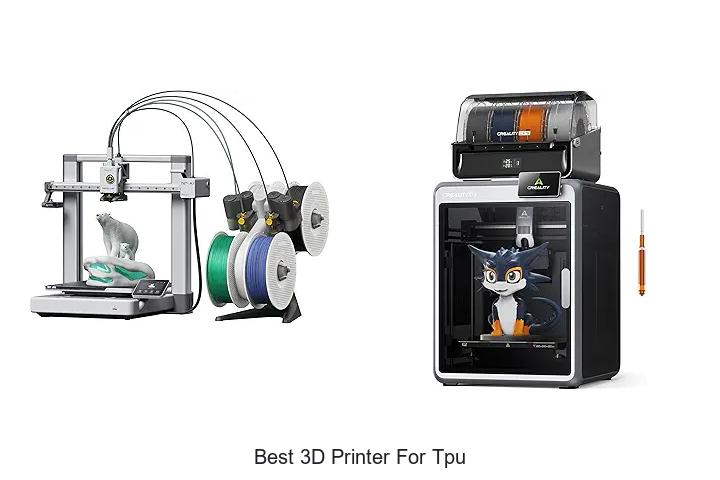
Top Best 3D Printer For TPU That Will Blow Your Mind!
Thermoplastic polyurethane (TPU) presents unique challenges and opportunities in additive manufacturing due to its flexible, elastic properties and high abrasion resistance. Achieving precise extrusion and maintaining dimensional accuracy with TPU filament demands a 3D printer equipped with advanced features such as a flexible filament-compatible extruder, optimized print bed adhesion, and precise thermal control.
The intrinsic softness and tendency for filament deformation require printers with reliable tension mechanisms and adaptive printing speeds to prevent clogging or stringing. Navigating these technical nuances is essential when searching for the best 3d printer for TPU, especially for applications ranging from wearable prototypes to custom automotive parts. Understanding the critical specifications and performance benchmarks can significantly impact print quality and durability.
Discover what sets the leading 3D printers apart in mastering TPU printing in the full article ahead.
Discover Top-Performing Machines Perfectly Suited for Flexible Filament Printing
| Image | Product | Price |
|---|---|---|
Our Pick 1  | Bambu Lab A1 Combo, A1 3D Printer and AMS lite, | Check Price On Amazon |
Our Pick 2  | Creality K2 Combo 3D Printer, Multicolor Printing with CFS, Max | Check Price On Amazon |
Our Pick 3 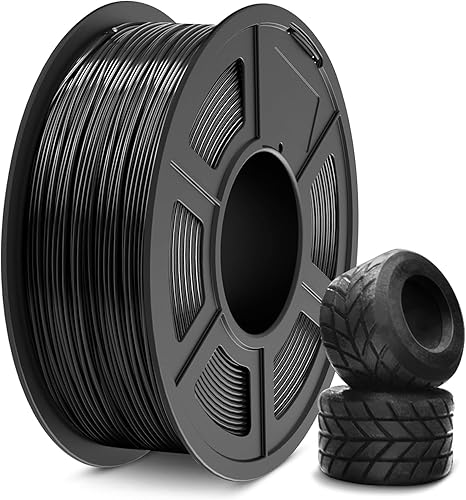 | SUNLU TPU 3D Printer Filament 1.75mm, High Speed 95A TPU | Check Price On Amazon |
1. Bambu Lab A1 Combo, A1 3D Printer and AMS lite,
Discover the Bambu Lab A1 Combo, a cutting-edge 3D printer designed to transform your printing experience with high-speed precision and vibrant multi-color capabilities. Perfect for hobbyists and professionals alike, it combines innovation and ease of use in one powerful package.
Equipped with AMS lite for seamless multi-color printing, the A1 achieves acceleration speeds up to 10,000 mm/s² while maintaining exceptional detail. Its full-auto calibration and active flow rate compensation ensure flawless prints, complemented by quiet operation and user-friendly touchscreen controls for a smooth creative process.
Pros
- Rapid printing speed with 10,000 mm/s² acceleration without compromising accuracy
- Supports multi-color printing via AMS lite, expanding creative possibilities
- Automatic calibration simplifies setup and ensures consistent print quality
- Quiet operation with active motor noise cancellation for distraction-free use
- Easy maintenance with 1-Clip quick swap nozzle system
- Compatible with various filament types, including TPU for flexible prints
- User-friendly touchscreen interface designed for all skill levels
Cons
- AMS lite required separately for multi-color printing if not purchasing the combo
Combining speed, precision, and versatility, the Bambu Lab A1 Combo stands out as an excellent choice for anyone seeking the best 3D printer for TPU and multi-material projects. Its ease of use and advanced features make it a smart investment compared to other printers in its class.
2. Creality K2 Combo 3D Printer, Multicolor Printing with CFS, Max
Discover the Creality K2 Combo 3D Printer, designed for vibrant multicolor printing and seamless usability. With its capability to combine up to 16 colors and a sizable 260 × 260 × 260 mm build volume, it’s an excellent pick for those seeking advanced, versatile 3D printing solutions.
This 3D printer boasts ultra-quiet operation through innovative step-servo motors and balanced fans, making it perfect for home or studio environments. Pre-assembled for immediate use and compatible with a wide range of materials, it also features smart auto-leveling and an AI camera to ensure precise, uninterrupted printing.
Pros
- Supports up to 16 colors via multiple CFS units, minimizing post-print painting
- Advanced step-servo motor system delivers high accuracy and low noise levels
- Smart auto-leveling and AI camera monitor prints in real-time to prevent errors
Cons
- Priced higher than direct manufacturer options, though sales may bridge the gap
The Creality K2 Combo stands out for users prioritizing quiet, colorful, and precise 3D printing with modern conveniences like app monitoring. While it carries a premium price, its feature set and ease of use make it a compelling choice compared to similar offerings in its class.
3. SUNLU TPU 3D Printer Filament 1.75mm, High Speed 95A TPU
Discover exceptional flexibility and durability with SUNLU TPU 3D Printer Filament 75mm, designed for fast and reliable printing.
Ideal for users seeking the best 3d printer for TPU projects, this filament combines outstanding resilience and smooth finish, perfect for versatile applications from wearable devices to robotics.
Manufactured from high-speed 95A thermoplastic polyurethane, SUNLU TPU filament ensures quick print times up to three times faster than standard TPU options. With precise dimensional accuracy of ±03mm, excellent layer adhesion, and a wide color range, it offers consistent, wear-resistant prints suitable for almost all
75mm FDM 3D printers.
Pros
- Fast printing speed without sacrificing flexibility or strength
- Robust layer adhesion resulting in smooth, durable finished parts
- Wide compatibility and multiple vibrant color choices for diverse projects
Cons
- Requires precise temperature control (210-230°C) to optimize results
For enthusiasts and professionals seeking reliable flexible filament, SUNLU TPU delivers excellent quality, performance, and value. Compared to similar TPU filaments, it offers superior speed and consistent print quality, making it a top choice for achieving durable and elastic 3D printed components.
4. OVERTURE TPU Filament 1.75mm Flexible Roll, 95A Soft 3D Printer

Discover exceptional flexibility and durability with the OVERTURE TPU Filament 75mm Flexible Roll, engineered specifically to meet the demands of projects requiring soft and resilient materials.
Its Shore hardness of 95A makes it an outstanding choice for applications like flexible parts, robotics, and wearable fashion designs.
Crafted with a patented clog-free formula, this TPU filament ensures smooth extrusion and flawless layer adhesion for professional-grade prints. Vacuum-sealed for freshness and compatibility with most 3D printers, it comes in a variety of vibrant colors to suit creative needs while maintaining consistent performance.
Pros
- Excellent balance of softness and durability with 95A Shore hardness
- Superior layer adhesion delivering smooth, detailed prints
- Patented clog-free formula ensures seamless printing without jams or bubbles
Cons
- Requires proper storage with desiccants to maintain performance over time
For anyone seeking the best 3D printer filament tailored for TPU applications, the OVERTURE TPU Filament offers reliable printability, flexible resilience, and vivid color options—all at an accessible price point. Its performance advantage over comparable filaments makes it a smart choice for both hobbyists and professionals.
5. Creality K2 Plus Combo 3D Printer, Multicolor Printing with 16

Experience the pinnacle of multicolor 3D printing with the Creality K2 Plus Combo, designed for creators seeking vibrant precision and versatility. Its innovative Color Filament System (CFS) enables dynamic 16-color blending, letting you bring complex and colorful models to life effortlessly.
The K2 Plus offers ultra-fast printing speeds up to 600mm/s while maintaining a 05mm layer precision, ensuring detailed outputs without compromise.
The smart filament management with sealed drying, along with AI-driven monitoring through dual cameras and sensors, minimizes print failures for a seamless creative process.
Pros
- Innovative CFS allows up to 16-color blending in one print, expanding creative possibilities.
- Exceptional print speed and precision at 600mm/s with quiet operation around 45dB.
- Advanced AI automation with real-time print monitoring reduces errors and improves reliability.
Cons
- Requires a longer 485 cable if positioning the CFS unit beside the printer, which is not included.
For users looking beyond standard single-color printers, the Creality K2 Plus Combo stands out as a top-tier choice for multicolor TPU and other filament types. Its intelligent features and expansive build volume make it well worth the investment for serious makers striving for vibrant, high-quality prints.
6. Creality K2 Pro Combo (A) 3D Printer, Multicolor 3D Printer

Discover exceptional multicolor 3D printing capabilities with the Creality K2 Pro Combo, designed for both hobbyists and professionals. Backed by a robust build volume and advanced technology, it delivers vibrant, precise prints with unmatched speed and quiet operation, making it a top contender for the best 3D printer for TPU and other flexible materials.
Equipped with a 300×300×300 mm build area and aerospace-grade aluminum alloy frame, the Creality K2 Pro Combo ensures durability and stability. Its unique 4-filament system supports up to 16 colors, while dual AI cameras monitor prints in real-time.
Pros
- Supports multicolor and multi-material printing with up to 16 colors via CFS units
- Large 300×300×300 mm build volume perfect for sizable or batch prints
- Advanced AI cameras and auto-leveling ensure precise, error-free printing
- Quiet yet fast printing speed up to 600 mm/s powered by step-servo motors
- Robust direct drive extruder with hardened steel nozzle ideal for TPU and engineering filaments
Cons
- High weight (84.9 lbs) may limit portability and require stable setup space
Offering an advanced feature set and professional-grade materials handling, the Creality K2 Pro Combo stands out among competitive multicolor 3D printers. Whether printing flexible TPU or robust engineering filaments, this model balances performance, reliability, and ease of use to deliver excellent value for both new and experienced users.
7. Black TPU Filament 1.75mm 250g (0.55lb), 95A Flexible Rubber-Like 3D

Discover the perfect balance of flexibility and durability with the Black TPU Filament 75mm 250g by Lotactree.
Designed for functional, rubber-like 3D prints, this filament offers exceptional elasticity and strength, making it an excellent choice for projects that demand both resilience and precision.
Crafted with a Shore hardness of 95A, this TPU filament delivers reliable extrusion and superior layer adhesion, ensuring smooth, clean prints. Available in convenient 250g spools suitable for smaller applications, its abrasion resistance and impact strength make it ideal for gaskets, phone cases, and dynamic prototypes requiring stretch and toughness.
Pros
- Reliable “plug and play” feeding, compatible even with Bowden extruders due to optimal 95A hardness
- Consistent black finish that minimizes visible layer lines, providing a sleek surface appearance
- Exceptional adhesion on PEI and glass print beds, reducing print failures and enhancing stability
Cons
- Requires slower print speeds (15–30 mm/s) to prevent nozzle jams and ensure print quality
For those seeking the best 3D printer filament tailored for TPU materials, Lotactree’s Black TPU is an outstanding choice that balances flexibility with robustness. Its user-friendly properties and functional durability distinguish it from softer, more challenging alternatives.
8. Creality K2 Plus Combo 3D Printer, Multi Color Printing with

Discover the Creality K2 Plus Combo 3D Printer, a powerhouse designed for multi-color printing with remarkable speed and precision. Ideal for enthusiasts seeking vibrant, multi-material projects, it combines advanced technology and user-friendly features in a large-format, enclosed system.
Support your creativity with up to 16 colors by linking four CFS units, eliminating the need for post-painting. The step-servo motor system enables fast printing speeds of 600mm/s with exceptional acceleration.
Equipped with a heated chamber, hardened steel nozzle, and dual AI cameras, it ensures high-quality, reliable results.
Pros
- Multi-color printing with up to 16 colors using CFS units
- High-speed printing with step-servo motors accelerating up to 30000mm/s²
- Supports diverse materials including TPU, PLA, ABS, and carbon fiber composites
Cons
- Heavy design requires sturdy setup and space considerations
Combining advanced features like intelligent filament management and automatic leveling, the Creality K2 Plus Combo stands out as a versatile and efficient choice for serious makers. Its balance of speed, precision, and multi-material compatibility makes it a top contender among the best 3D printers for TPU and other flexible filaments.
9. AMOLEN 95A TPU 3D Printer Filament, 1.75mm Glow in The

Discover vibrant, flexible 3D printing with AMOLEN’s 95A TPU filament that glows in the dark. Designed for durability and elasticity, this filament is perfect for creating striking, resilient prints that stand out even in low-light environments. Ideal for makers seeking the best 3D printer filament for TPU projects.
Crafted with precision, AMOLEN’s TPU filament offers consistent 75mm diameter accuracy, ensuring smooth extrusion without clogs or bubbles. Its high shore hardness and elasticity enable prints that are both strong and flexible.
The glow-in-the-dark feature adds a unique aesthetic, transforming daytime creations into luminous night displays.
Pros
- Unique glow-in-the-dark effect for striking visual appeal in dark settings
- Excellent flexibility and resilience with 95A shore hardness and threefold stretchability
- Consistent 1.75 ± 0.02mm diameter for reliable, clog-free printing performance
Cons
- May require tweaking print settings for optimal results, especially for fine detail layers
Balancing exceptional glow effects with reliable mechanical properties, AMOLEN’s TPU filament offers a standout option for enthusiasts seeking flexibility and visual impact. While it might demand some setup adjustments, its consistent quality and innovative features make it a compelling choice compared to other flexible filaments on the market.
10. Creality K1 Max 3D Printer, 600mm/s Max High-Speed 3D Printers

Experience the ultimate blend of speed, precision, and large-scale capability with the Creality K1 Max 3D Printer. Designed to accelerate your projects, this high-performance machine delivers up to 600mm/s printing speed, making it an ideal choice for both enthusiasts and professionals seeking efficiency and quality in 3D printing.
Featuring a spacious 300×300×300mm build volume, the Creality K1 Max accommodates multiple models simultaneously, boosting productivity. Advanced AI-powered LiDAR and camera systems ensure real-time error detection and auto-leveling, while the powerful dual cooling fans and ceramic heater support consistent filament melting and flawless layer adhesion.
Pros
- Exceptional printing speed up to 600mm/s with rapid acceleration for faster project turnaround.
- Generous build volume enabling large prints or multiple models at once, maximizing output.
- Smart AI LiDAR and camera monitoring for automatic error detection and real-time print supervision.
Cons
- Noisy cooling fans may require placement consideration in quiet environments.
Offering a standout balance between speed, precision, and innovative features, the Creality K1 Max sets itself apart from competitors like the Ender Its advanced technology, large build area, and ease of use make it an excellent investment for users seeking the best 3D printer for TPU and other versatile materials.
Top 3D Printers Perfect for Printing Flexible TPU Material
Build quality and frame stability
When choosing the best 3d printer for tpu, paying close attention to build quality and frame stability is essential for achieving high-quality prints. A sturdy frame made from durable materials helps maintain consistent alignment and reduces unwanted vibrations during the printing process, which is especially important when working with flexible filaments like TPU.
Additionally, reliable bed leveling mechanisms play a crucial role, as they ensure the print bed remains perfectly flat and stable, preventing warping or adhesion issues that can be challenging with TPU. Prioritizing these aspects will lead to better material durability in your final prints and a more user-friendly experience overall.
Print compatibility with tpu
When considering print compatibility with TPU, it is important to look for flexible filament support since TPU is a pliable material that requires a printer capable of handling its unique properties. Printers equipped with a direct drive extruder tend to offer better results for TPU as this setup allows for more precise filament control and reduces the risk of jams that can occur with a Bowden extruder.
Additionally, the nozzle temperature range should be suitable for TPU, which typically requires temperatures between 210°C and 250°C to ensure proper melting and adhesion without degrading the material. Understanding these key features helps ensure a smoother printing experience and better quality finished products when working with TPU filament.
User experience and software
When exploring the best 3d printer for tpu, it is important to consider the overall user experience and software capabilities to ensure smooth printing with flexible materials. Ease of setup and calibration play a crucial role, especially for beginners, as certain printers come with guided processes or automatic bed leveling that simplify preparing the machine for TPU filament.
An intuitive user interface and controls, such as responsive touchscreens or straightforward menus, allow for easier navigation through print options and real-time adjustments. Together, these factors help create a more enjoyable and efficient printing process when working with TPU, making it less frustrating and more rewarding for those new to 3D printing with flexible materials.
Printer speed and precision
Printer speed and precision are essential factors to consider when selecting the best 3d printer for tpu, a flexible material that demands careful calibration for optimal results. TPU prints best at moderate speeds to ensure the filament extrudes smoothly without causing stringing or blobs, with recommended print speeds typically ranging between 20 to 30 mm/s. The ability to adjust layer resolution options allows users to balance detail and print time; finer resolutions provide smoother surfaces and intricate details but take longer to print, which is particularly important when working with flexible filaments.
The ability to adjust layer resolution options allows users to balance detail and print time; finer resolutions provide smoother surfaces and intricate details but take longer to print, which is particularly important when working with flexible filaments. Equally important are retraction settings and control, as TPU’s elasticity can make it prone to oozing or clogging if the printer lacks precise retraction capabilities. A printer with customizable retraction distance and speed helps prevent issues such as stringing, ensuring prints remain clean and well-defined.
Considering these features together will help beginners choose a 3d printer that handles TPU effectively, producing strong and flexible objects with a smooth finish.
Print bed and adhesion
When choosing a printer for flexible materials like TPU, one of the most important factors to consider is the bed’s ability to maintain consistent heat, as this helps prevent warping and ensures layers stick properly throughout the printing process. A heated bed capability is essential because TPU requires a stable temperature to adhere well during printing.
It’s also important to think about the bed size and print volume, especially if you plan to work on larger projects or multiple parts simultaneously. A sufficiently sized bed gives you the freedom to explore diverse designs without constantly adjusting your setup.
Paying attention to these features will help you achieve reliable results and make your printing experience smoother when working with flexible materials.
Additional features and support
When looking for the best 3d printer for tpu, it is important to consider models that offer an enclosed print area. This feature helps maintain a stable temperature environment, which is essential for printing flexible materials like TPU effectively and preventing warping or other print issues. Additionally, good customer service and a strong community support network can make a big difference, especially for beginners who may need guidance or troubleshooting help.
Many manufacturers provide detailed manuals, responsive support teams, and active online forums where users share tips and solutions. It’s also wise to choose a printer with easy access to maintenance services and readily available spare parts.
This ensures that any worn-out components can be quickly replaced, minimizing downtime and keeping your printing projects on track. Together, these aspects contribute to a smooth printing experience, making it easier for newcomers to successfully create flexible, durable prints with TPU material.
FAQ’s
Which Features Should I Look For In A Printer To Successfully Print Flexible Tpu Materials?
To successfully print flexible TPU materials, look for a printer with a direct drive extruder for better filament control and adjustable print speed settings to prevent filament slipping. Additionally, ensure the printer has a heated bed and good adhesion surface to reduce warping.
How Do Different Printer Models Handle Tpu Filament In Terms Of Print Quality And Reliability?
Different printer models vary in handling TPU filament, with direct-drive extruders generally providing better print quality and reliability due to improved filament control and reduced risk of jams. Bowden-style printers may struggle with TPU, often requiring slow print speeds and adjustments to achieve consistent results.
What Are Common Challenges When Printing Tpu And Which Printers Offer The Best Solutions?
Common challenges when printing TPU include stringing, bed adhesion issues, and inconsistent extrusion due to its flexible nature. Printers like the Prusa i3 MK3S and Ultimaker S5 offer reliable solutions with features such as direct drive extruders and precise temperature control that handle TPU more effectively.
What Are The Best Printers For Printing With Tpu Filament?
The best printers for printing with TPU filament are those with direct drive extruders, such as the Prusa i3 MK3S+ and the Creality Ender 3 V2 equipped with an upgraded extruder. These printers provide better filament control and reduce jams, ensuring smooth and flexible TPU prints.
Are There Budget-Friendly Printers That Perform Well With Tpu?
Yes, there are budget-friendly printers like the Creality Ender 3 and Anycubic i3 Mega that perform well with TPU filament. These printers offer good print quality and flexibility settings suitable for TPU without requiring expensive upgrades.
Conclusion
In summary, the best 3D printer for TPU offers excellent flexibility, precise extrusion, and strong build quality to handle the material’s unique properties. Key features include a reliable direct drive extruder, a heated bed, and adjustable print settings to ensure smooth, high-quality prints. Investing in a printer designed for TPU guarantees durability and versatility for your flexible projects.
Investing in a printer designed for TPU guarantees durability and versatility for your flexible projects.