Optimal resolution parameters, color depth, and DPI calibration are critical factors in achieving superior print clarity. Central to these considerations is determining the best PPI for printing, a technical specification that directly influences the fidelity and sharpness of printed images.
Understanding the interplay between pixels per inch and output device capabilities can unlock new levels of detail and vibrancy, pushing the boundaries of print technology. Selecting the best PPI for printing goes beyond mere numbers; it requires insight into the intricate balance between digital image processing and the physical limitations of various printing substrates. This nuanced relationship can significantly impact not only the final quality but also the efficiency and consistency of print production.
As printing methodologies continue to evolve, mastering the technical criteria behind the best PPI for printing becomes essential for professionals aiming to deliver impeccable results. Delve deeper to uncover how these factors shape print innovation and quality optimization.
Unlock Crisp Clarity: Explore the Best PPI for Printing Options
| Image | Product | Price |
|---|---|---|
Our Pick 1 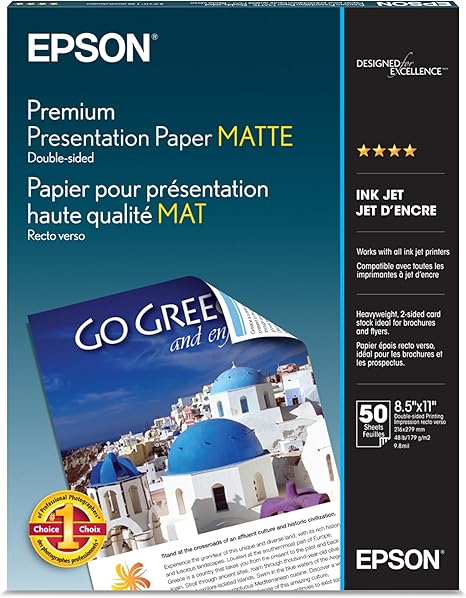 | Epson Premium Presentation Paper MATTE (8.5×11 Inches, Double-sided, 50 Sheets) | Check Price On Amazon |
Our Pick 2  | Canon 7981A004 Photo Paper Plus, Matte, 8-1/2 x 11 (Pack | Check Price On Amazon |
Our Pick 3  | HP Everyday Photo Paper, Glossy, 8.5×11 in, 50 sheets (Q8723A) | Check Price On Amazon |
1. Epson Premium Presentation Paper MATTE (8.5×11 Inches, Double-sided, 50 Sheets)
Elevate your printing projects with Epson Premium Presentation Paper MATTE, designed to deliver stunning, non-glare prints ideal for photographs, crafts, and signage. Its double-sided feature and fade resistance make it a reliable choice for professional-quality work that lasts up to 72 years.
Measuring 5 by 11 inches, this pack includes 50 sheets of 45 lb matte paper compatible with all inkjet printers.
25 pounds, it produces sharp, vibrant images without glare, perfect for presentations and creative endeavors demanding high-quality print output.
Pros
- Exceptional fade resistance ensures prints remain vibrant for up to 72 years, preserving important documents and photos.
- Double-sided printing capability maximizes efficiency and versatility for crafting, presentations, and signage.
- Guaranteed compatibility with all inkjet printers reduces printing errors and delivers consistent, professional results.
Cons
- The 45 lb paper weight, while suitable for most printing needs, may feel thinner compared to heavier cardstock options used in premium presentations.
Ideal for users seeking high-quality matte paper that prevents glare and ensures long-lasting prints, this Epson pack offers excellent value for creative projects or professional presentations. Its reliable inkjet compatibility and double-sided design set it apart among standard printing papers.
2. Canon 7981A004 Photo Paper Plus, Matte, 8-1/2 x 11 (Pack
Canon 7981A004 Photo Paper Plus Matte offers superior print quality with a smooth, non-glossy finish ideal for stunning photo prints. Perfectly sized for 5 x 11 inches, this pack of 50 sheets delivers vibrant colors and crisp details, making it a top choice for professional and personal photo projects.
5 x 11 inches, this pack of 50 sheets delivers vibrant colors and crisp details, making it a top choice for professional and personal photo projects.
Designed for consistent, high-quality results, this photo paper weighs 45 pounds, providing a sturdy feel and preventing ink bleed-through. Compatible with various inkjet printers, it ensures each print showcases vibrant visuals with a matte texture that reduces glare. The 50-sheet count supports multiple creative projects or photo albums.
The 50-sheet count supports multiple creative projects or photo albums.
Pros
- Produces vibrant, sharp images with a smooth matte finish that minimizes glare and fingerprints.
- Durable 45-pound weight ensures printed photos have a professional feel and resist curling or warping.
- Generous 50-sheet pack size offers excellent value for frequent printing needs without compromising quality.
Cons
- Matte finish may slightly dull extremely glossy or high-contrast images compared to glossy photo papers.
Overall, Canon 7981A004 Photo Paper Plus Matte is an excellent choice for users seeking high-quality prints with a refined matte texture. Ideal for photo portfolios, scrapbooking, or gift prints, it balances durability and vibrant color reproduction, standing out among other standard photo papers in its category.
3. HP Everyday Photo Paper, Glossy, 8.5×11 in, 50 sheets (Q8723A)
Experience vibrant, sharp photo prints with HP Everyday Photo Paper, Glossy, designed to bring your memories to life. This high-quality
Boasting a glossy finish and quick-dry technology, each sheet produces professional-looking photos that resist fading for decades when paired with Original HP Ink. Compatible with the HP Smart app, it allows seamless printing from your phone and customization through intuitive editing tools. Made from FSC-certified, recyclable materials, it’s crafted with sustainability in mind without compromising on performance.
Made from FSC-certified, recyclable materials, it’s crafted with sustainability in mind without compromising on performance.
Pros
- Bright, glossy finish enhances photo vibrancy and detail for striking visual appeal
- Quick-dry paper minimizes smudging and delivers durable prints immediately from the printer
- Environmentally friendly with FSC-certified, recyclable materials supporting sustainable printing
Cons
- Limited to 50 sheets per pack, which might require frequent replenishment for high-volume printing
HP Everyday Photo Paper is an excellent choice for users seeking a reliable and eco-conscious option to create lasting photo memories at home. Its combination of ease-of-use, quick drying, and brilliant image quality makes it ideal for everyday photo printing needs.
4. Epson EcoTank Photo ET-8550 Wireless Wide-Format Color All-in-One Supertank Printer

Experience outstanding color printing with the Epson EcoTank Photo ET-8550, designed for photographers and creatives seeking lab-quality photos without the hassle of cartridges. Combining wireless convenience with supertank technology, it delivers vibrant, sharp images ideal for both everyday printing and specialty projects.
This all-in-one inkjet printer boasts an advanced 6-color Claria ET Premium ink system and a high-accuracy printhead, producing 4 x 6 photos in as little as 15 seconds. It supports wide-format borderless printing up to 13 x 19 and handles varied media types including cardstock and CDs with thicknesses up to 3 mm, enhanced by auto 2-sided functionality and seamless mobile control via the Epson Smart Panel app.
3 mm, enhanced by auto 2-sided functionality and seamless mobile control via the Epson Smart Panel app.
Pros
- Cost-effective printing with zero cartridge waste and replacement ink bottles that print up to 6,200 color pages, saving users approximately 80% versus traditional cartridges.
- Exceptional media versatility supports borderless photos, specialty papers, and even printable CDs/DVDs, catering to creative project demands.
- Intuitive 4.3″ color touchscreen coupled with voice-activated printing and wireless connectivity for smooth setup and operation via mobile devices (iOS and Android).
Cons
- At 24.5 pounds and sizeable dimensions, it may require ample desk or workspace compared to more compact printers in its class.
The Epson EcoTank Photo ET-8550 is a smart investment for users demanding high-quality photo prints and versatile media handling in a cartridge-free solution. Its cost savings and wireless features make it ideal for both home studios and small businesses focused on creative printing.
5. CanonInk Glossy Photo Paper 4″x 6″ 100 Sheets (1433C001), Red
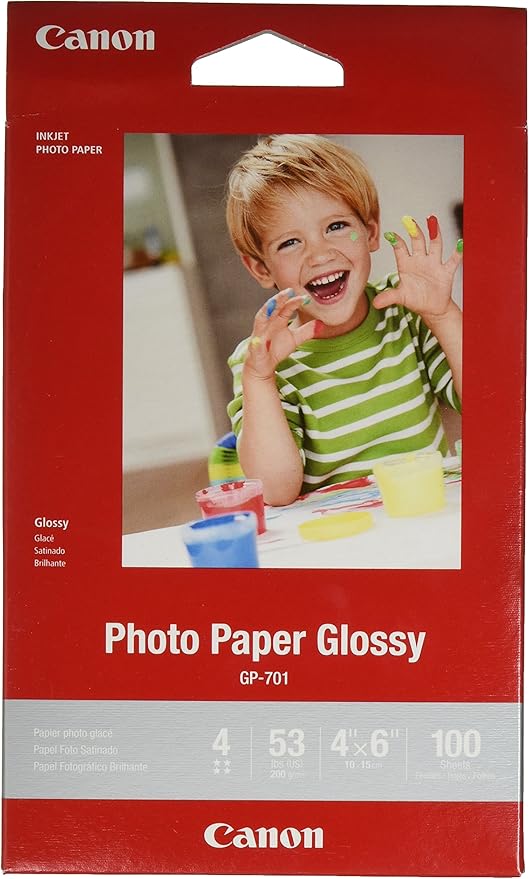
Experience vibrant, high-quality photo prints with CanonInk Glossy Photo Paper, designed to bring your images to life with a stunning glossy finish and rich colors. Perfect for preserving precious memories, this 4 x 6 photo paper offers an economical solution for professional-looking prints at home.
CanonInk’s Glossy Photo Paper Plus II delivers crisp, clear photos that mimic the look and feel of traditional photographs. Each pack contains 100 sheets of 4 x 6 paper weighing 70gsm, ideal for producing sharp, vivid images without the premium price tag.
Pros
- Exceptional glossy finish enhances color vibrancy, providing photo-quality prints with depth and clarity
- Economical pack of 100 sheets ensures ample supply for multiple projects or photo sessions
- Compatible size (4″x6″) fits a wide range of standard photo printers, delivering versatile usability
Cons
- Limited to glossy finish only; lacks matte or other texture options for varied photo effects
CanonInk Glossy Photo Paper 4×6 offers an excellent balance of quality and affordability, making it a top choice for photo enthusiasts seeking the best PPI for printing at home. Its reliable performance and rich color reproduction suit both casual users and those wanting professional-grade results on a budget.
6. Canon PIXMA TS702a Wireless Single Function Printer |Mobile Printing with

Discover seamless, high-quality printing with the Canon PIXMA TS702a Wireless Single Function Printer. Perfectly suited for home and office use, it combines efficient wireless connectivity with crisp color output, empowering users to print effortlessly from smartphones and Apple devices using AirPrint.
Equipped with a 350-sheet plain paper capacity and Auto 2-sided duplex printing, the PIXMA TS702a handles large print jobs while reducing paper waste. Its Hybrid Ink System delivers vivid colors and sharp black text at a resolution of 4800 x 1200 dpi, all managed through the intuitive Canon PRINT app for mobile convenience.
Pros
- Wireless printing via Wi-Fi and AirPrint ensures quick, hands-free operation from smartphones, tablets, and Macs.
- Large 350-sheet plain paper tray minimizes frequent refills, ideal for high-volume printing needs.
- Hybrid Ink System combines dye and pigment inks, creating vibrant color documents and crisp text for professional-quality results.
Cons
- As a single-function printer, it lacks scanning and copying capabilities, which may require additional devices for multitasking needs.
The Canon PIXMA TS702a is a strong contender for anyone seeking reliable wireless printing with rich color output and efficient media handling. It stands out for users prioritizing document printing over multifunction features, offering excellent value for home offices and small businesses.
7. Epson Ultra Premium Photo Paper Glossy (8.5×11 Inches, 50 Sheets)

Epson Ultra Premium Photo Paper Glossy delivers vibrant, professional-quality prints perfect for photographers and creatives seeking exceptional image clarity. Its ultra-smooth, bright white surface ensures every detail pops, making it ideal for producing gallery-worthy photos right from your home or office printer.
Designed with a heavy weight and fast-drying, smudge-resistant coating, this 5×11 inch photo paper provides durability and resistance to water damage.
Pros
- Extra heavy weight paper delivering a premium feel and sturdy prints that resist curling and tearing.
- Fast-drying, smudge, and water-resistant coating to protect photos from accidental spills and handling.
- Ultra-smooth, bright white surface enhances color accuracy and sharpness for vivid, lifelike images.
Cons
- Price point is relatively higher than basic photo papers, reflecting its premium quality.
Perfect for those aiming to print high-quality photos with rich detail and durability, Epson Ultra Premium Photo Paper Glossy stands out in its category. Its combination of thickness, brightness, and resistance features offers superior value, especially compared to standard photo papers lacking durability and finish.
8. Epson Ultra Premium Presentation Paper MATTE (8.5×11 Inches, 50 Sheets)

Experience vivid, professional-quality prints with Epson Ultra Premium Presentation Paper MATTE. Designed for exceptional color reproduction and smooth handling, this paper ensures your documents and presentations stand out with remarkable clarity and instant drying.
Perfectly sized at 5×11 inches, it meets all your high-quality printing needs.
This premium matte paper offers a high color gamut that delivers stunning color accuracy, making photos and graphics truly pop. Manufactured in Japan and weighing 30 pounds per ream, its durable surface supports Epson Professional Inks for quick drying, reducing smudges and facilitating immediate use after printing.
Pros
- High color gamut provides vivid, accurate color reproduction ideal for presentations and photo printing
- Instant drying feature allows for smudge-free, easy handling right after printing with Epson Professional Inks
- Premium matte finish reduces glare and adds a professional touch to documents
Cons
- Limited to 50 sheets per pack, which may require frequent replacement for high-volume printing
Ideal for professionals and creatives seeking outstanding print quality, Epson Ultra Premium Presentation Paper MATTE balances performance with convenience. Its superior color reproduction and smooth matte finish make it the best choice for printing presentations, photos, and marketing materials with crisp, vivid results.
9. HP Everyday Photo Paper, Glossy, 4×6 in, 100 sheets (CR759A)

Discover vivid, professional-quality prints with HP Everyday Photo Paper, Glossy, designed to bring your cherished memories to life. Ideal for 4×6 inch photos, this pack of 100 sheets offers a bright, glossy finish that enhances every detail, ensuring your prints stand out with clarity and color brilliance.
Crafted with FSC-certified, recyclable paper, this photo paper balances sustainability with exceptional durability. Its quick-dry surface resists smudging and fading, preserving your images for decades when paired with Original HP Ink. Compatible with the HP Smart app, printing from your phone and customizing photos has never been easier or more convenient.
Compatible with the HP Smart app, printing from your phone and customizing photos has never been easier or more convenient.
Pros
- Vibrant, glossy finish that enhances photo clarity and color accuracy for stunning 4×6 inch prints.
- Environmentally responsible with FSC-certified, recyclable paper that supports sustainability efforts.
- Durable, quick-dry sheets that prevent smudging and fading, ensuring long-lasting photo preservation.
Cons
- Limited to 4×6 inch photos, which may require additional products for larger print sizes.
HP Everyday Photo Paper, Glossy is a reliable choice for anyone seeking the best PPI for printing photo projects at home. Its blend of quality, sustainability, and ease of use makes it especially well-suited for crafting personalized photo keepsakes, effortlessly delivering professional results every time.
10. Epson Expression Photo HD XP-15000 Wireless Color Wide-Format Printer, Amazon

Discover exceptional photo printing quality with the Epson Expression Photo HD XP-15000 Wireless Color Wide-Format Printer. Designed for enthusiasts and professionals alike, this compact yet powerful device produces stunning borderless images up to 13 x 19 with ultra HD clarity and vibrant color accuracy.
Equipped with a six-color Claria Photo HD ink set—including red and gray inks—this printer expands your color gamut and enriches black-and-white photos with richer detail. Its wireless connectivity, automatic duplex printing, and 50-sheet rear tray accommodate various media types seamlessly, while Epson’s Dash Replenishment ensures ink is always ready when you need it.
Pros
- Produces professional-grade borderless prints up to 13″ x 19″ with ultra-high-definition resolution (5760 x 1440 dpi).
- Six individual ink cartridges, including unique red and gray inks, deliver an expanded color range and enhanced black-and-white photo prints.
- Compact A3+ wide-format design fits easily on desktops while accommodating a variety of paper sizes and finishes, including cardstock.
- Auto two-sided printing and dual trays (50-sheet rear specialty media tray and 200-sheet front tray) increase convenience and workflow efficiency.
- Wireless connectivity and compatibility with PCs and tablets enable seamless printing from multiple devices.
- Epson Dash Replenishment automatically tracks ink levels and reorders supplies, preventing interruptions during important print projects.
Cons
- Limited to print-only functions without scanning or copying capabilities, which may require additional devices for full document management.
The Epson Expression Photo HD XP-15000 excels for users prioritizing high-quality, large-format photo prints with rich color fidelity. Its compact footprint and intelligent features simplify professional photo production at home or in a small office.
Ideal for photographers and creatives seeking vibrant, borderless images without complex setups.
How to Choose the Best PPI for Printing Quality
Optimal ppi range for print quality
Image resolution measured in pixels per inch (PPI) directly influences the clarity and detail of printed materials, making it a critical factor in printing quality.
Higher PPI values result in sharper, more defined images by increasing pixel density, which is especially important for smaller print sizes viewed up close, such as photographs or fine art prints. Conversely, lower PPI may suffice for large-format prints like banners or posters that are typically viewed from a distance, where the human eye cannot discern fine details.
This balance allows for optimized file sizes without sacrificing visible quality, preventing unnecessarily large files that can slow down printing processes and consume excess storage.
The recommended resolution varies depending on print dimensions—for example, 300 PPI is commonly ideal for standard photographic prints to maintain crispness, while 150 PPI can be adequate for large prints viewed several feet away. Understanding these nuances helps manage the trade-off between image sharpness and data efficiency. Additionally, considering the intended viewing distance ensures that prints appear visually sharp without overloading the printer with excessively high-resolution files, leading to efficient production and impressive visual results.
Image source and file preparation
Image resolution must align precisely with the intended print density to ensure sharp, detailed output without pixelation or blurriness.
The clarity of a printed image hinges on matching the original file’s resolution to the target pixels per inch (PPI). If the original image’s resolution is too low, enlarging it can lead to loss of definition, while excessively high resolutions might cause unnecessarily large file sizes without visual benefit.
Proper scaling techniques, such as bicubic interpolation for upscaling or downscaling, maintain image integrity by smoothing transitions and preserving edge detail, preventing quality degradation during size adjustments.
File format also plays a critical role; lossless formats like TIFF retain all image data crucial for high-quality prints, whereas compressed JPEGs can introduce artifacts that diminish clarity. Additionally, ensuring color profile compatibility—such as using CMYK profiles optimized for printers rather than RGB used for screens—helps avoid color shifts that adversely affect print appearance and detail reproduction.
Balancing ppi with print purpose and viewing distance
Pixel density significantly influences the sharpness and clarity of printed images, but its optimal level depends heavily on the intended use and viewing distance of the final print.
High-resolution prints, such as fine art reproductions and photographic portraits meant for close inspection, typically require a PPI of 300 or more to preserve intricate details and smooth gradients. In contrast, large-format prints like banners or billboards are generally viewed from several feet away, allowing for much lower PPIs—often between 100 and 150—without noticeable loss of image quality. This difference arises because human vision cannot resolve fine details at greater distances, making ultra-high resolution unnecessary and unnecessarily costly for large prints.
This difference arises because human vision cannot resolve fine details at greater distances, making ultra-high resolution unnecessary and unnecessarily costly for large prints.
Carefully calculating the appropriate pixel density based on how and where the print will be displayed helps balance file size, printing costs, and visual impact. For example, indoor exhibition pieces demand finer detail than outdoor signage, where texture and lighting might reduce perceived sharpness.
By aligning PPI with viewing conditions, it’s possible to optimize resource use, avoid overkill in resolution, and achieve cost-effective results tailored to each project’s purpose.
Material and paper impact on ppi requirements
The choice of material and paper type significantly influences the effective resolution needed for crisp, detailed prints. Different surfaces interact uniquely with ink and pixel density, making consistent sharpness dependent on matching PPI to the paper’s characteristics.
For instance, glossy paper’s smooth, reflective finish allows ink to sit on the surface without much absorption, enabling high-resolution dots to retain their sharp edges even at moderate PPI settings. In contrast, matte papers absorb more ink, which can cause slight spreading or feathering; this often requires a higher pixel density to compensate for the loss in perceived sharpness.
Ink absorption rates and paper finishes determine how much detail can truly be rendered. High absorption demands increasing pixel density beyond typical levels, sometimes above 300 PPI, to maintain clarity.
Meanwhile, smooth surfaces paired with compatible inks support detailed prints at standard or slightly lower PPI values. Ensuring that the selected paper can handle high-resolution printing without bleeding or blurring is critical for achieving professional-quality images and preserving intended detail.
Printer compatibility and output capabilities
Alignment between an image’s pixel density and a printer’s resolution is fundamental to achieving crisp, high-quality prints. The pixel per inch (PPI) of a digital image needs to complement the dots per inch (DPI) capability of the printer to prevent loss of sharpness or detail in the final output.
Different printing technologies handle resolution differently; inkjet printers generally produce smoother gradients and finer details at higher PPIs due to their droplet-based mechanism, while laser printers, which rely on toner dots, have lower effective resolution ceilings and may not benefit as much from extremely high PPIs. Optimizing printer settings—such as selecting the appropriate print resolution, paper type, and quality modes—can enhance sharpness by ensuring the printer interprets image data according to its hardware capabilities.
Hardware limitations also play a significant role. Most home and office printers have an optimal usable DPI range that dictates the practical maximum PPI that can be printed effectively.
Understanding these nuances helps in preparing images that match the printer’s precise output capabilities for the best balance of clarity, detail, and resource efficiency.
Frequently Asked Questions (FAQs)
Are There Differences In The Ideal Ppi For Printing On Various Materials Like Paper, Canvas, Or Fabric?
Yes, the ideal PPI varies by material: for paper, 300 PPI is standard for sharp prints; canvas can work well around 150-200 PPI due to its texture; and fabric printing often uses 150 PPI or lower since fibers blur fine details. Adjust your resolution based on the material’s surface to ensure clear, vibrant results.
What Is The Best Ppi (Pixels Per Inch) To Use For High-Quality Photo Printing?
For high-quality photo prints, aim for a resolution of 300 PPI (pixels per inch) to ensure sharp, detailed images. Going higher than 300 PPI usually won’t noticeably improve print quality but can increase file size unnecessarily. For larger prints viewed from a distance, you can go as low as 150-200 PPI without losing clarity.
Which Ppi Settings Should I Choose For Printing Large Posters Without Losing Image Quality?
For large posters, aim for a PPI between 150 and 300 to maintain image quality while keeping file sizes manageable. If the viewing distance is greater (several feet), 150 PPI is typically sufficient; for closer inspection, go closer to 300 PPI. Always ensure your original image is high resolution to avoid pixelation when printed large.
Can I Print A Low-Resolution Image At A Higher Ppi To Improve Print Quality, Or Do I Need An Original High-Ppi File?
Printing a low-resolution image at a higher PPI won’t improve quality because the image lacks enough detail to begin with. For sharp prints, you need an original file with sufficient resolution—generally around 200-300 PPI at the final print size. Otherwise, the print will appear blurry or pixelated regardless of PPI settings.
How Does The Ppi Affect The Sharpness And Clarity Of Printed Images?
PPI (pixels per inch) directly impacts the sharpness and clarity of printed images by determining how many pixels fit into each inch of the print. Higher PPI values (usually around 300 or more) produce finer detail and crisper images, while lower PPI can cause prints to appear blurry or pixelated. For best results, always use image files with a PPI that matches or exceeds your printer’s recommended resolution.
Conclusion
In summary, selecting the best ppi for printing ensures crisp, vibrant images and sharp text that bring your projects to life with exceptional detail. This optimal resolution enhances the quality and versatility of your prints, whether for photos, marketing materials, or professional documents.