Advanced additive manufacturing techniques and precision layering algorithms define the landscape of the best 3d printing solutions for high-detail prototypes. In sectors where dimensional accuracy and intricate surface finishes are pivotal—such as aerospace, medical device engineering, and consumer electronics—the capability to produce complex geometries with micron-level resolution is a game-changer.
Understanding these technological breakthroughs is essential for professionals seeking to reduce iteration cycles and accelerate product development. As the demand for ultra-precise, functional prototypes intensifies, the next wave of 3D printing innovations promises to redefine what’s achievable in prototype manufacturing.
Dive into this exploration of cutting-edge advancements shaping the future of high-detail prototyping.
Explore the Best 3D Printing Solutions for High-Detail Prototypes!
| Image | Product | Price |
|---|---|---|
Our Pick 1  | 3D Printer Super Glue Thin for PLA, ABS, PETG, TPU | Check Price On Amazon |
Our Pick 2  | 68Pcs 3D Printer Tools Kit with Storage Case, 3D Printer | Check Price On Amazon |
Our Pick 3  | 3D Printing For Dummies | Check Price On Amazon |
1. 3D Printer Super Glue Thin for PLA, ABS, PETG, TPU
Deliver precision and lasting strength to your 3D print projects with the 3D Printer Super Glue Thin, expertly formulated to bond high-detail prototypes crafted from PLA, ABS, PETG, TPU, and more. Its ultra-thin viscosity enables seamless gluing of micro gaps, perfect for intricate assemblies and resin models.
Engineered for reliability across all popular 3D printing filaments, this super glue ensures a clean, residue-free finish without warping or blooming. The XXL 76 oz size offers ample supply for extended use, while the precision needle tip guarantees controlled application with zero clogging.
Resistant to heat up to 110°C and waterproof, it’s ideal for durable parts including RC models, drones, and electronics.
Pros
- Ultra-thin formula efficiently penetrates tight seams and micro cracks, ensuring superb bonding for delicate prototype details.
- Compatible with multiple filament types including PLA, ABS, PETG, TPU, ASA, and Nylon, offering versatile use for diverse 3D printing projects.
- Precision needle tip enables mess-free, pinpoint application and maintains fluidity with no clogging between uses.
- Generous XXL bottle size provides 5 times more volume than typical super glue, supporting frequent and long-term use.
- Heat and water resistant bond withstands temperatures up to 110°C, ensuring durability in outdoor and functional components.
Cons
- Thin liquid consistency may require careful handling to avoid accidental spills during application.
Ideal for professional makers and enthusiasts demanding precise, durable adhesion on high-detail 3D prints, this super glue combines strength with versatile filament compatibility. Its carefully engineered formula stands out against standard adhesives by offering superior penetration and resistance, making it an excellent choice for complex prototyping and durable repair tasks.
2. 68Pcs 3D Printer Tools Kit with Storage Case, 3D Printer
Enhance your 3D printing experience with the 68Pcs 3D Printer Tools Kit, designed by seasoned enthusiasts to provide every essential tool for precise and efficient model creation. Its comprehensive range supports detailed prototyping and smooth post-processing, making it a standout solution for high-detail 3D printing projects.
This all-in-one kit boasts 68 pieces including wire cutters, needle-nose pliers, a high-quality hand drill with multiple bits, and various metal files tailored for diverse materials like PLA, PETG, and ABS. With specialized scrapers, razorsharp blades, and cleaning needles, it ensures flawless model removal and nozzle upkeep, all neatly organized within a durable 900D Oxford storage case.
Pros
- Comprehensive set with 68 premium tools, covering cutting, drilling, filing, polishing, and cleaning to support a wide variety of filament materials.
- Durable, well-organized 900D Oxford fabric storage case featuring bright orange tags for quick tool identification and easy transport.
- Includes specialized accessories such as a 360° swivel deburring tool, 10 extra tempered high-speed steel blades, and multiple nozzle cleaning needles to maintain optimal printer performance.
Cons
- The kit’s weight and volume might be bulkier compared to more minimalist toolsets, potentially less convenient for users seeking ultra-compact portability.
Ideal for hobbyists and professionals focused on the best 3D printing solutions for high-detail prototypes, this tool kit delivers versatility and durability in one package. Its thoughtful design and wide tool selection make it an invaluable companion for optimizing and refining your 3D printing projects with confidence.
3. 3D Printing For Dummies
Unlock the potential of additive manufacturing with 3D Printing For Dummies, an essential guide designed to simplify the complexities of 3D printing. Ideal for beginners and hobbyists, this book demystifies the technology behind the best 3d printing solutions for high-detail prototypes, enabling creativity and precision.
Covering everything from selecting the right printer to optimizing print quality, this comprehensive manual provides clear explanations and practical tips. Readers gain insights into materials, design considerations, and troubleshooting to confidently create detailed and accurate prototypes with ease.
Pros
- Step-by-step guidance tailored for beginners, making advanced 3D printing concepts accessible.
- Comprehensive coverage of high-detail prototype techniques that enhance precision and surface finish.
- Easy-to-understand language combined with real-world examples maximizes learning and application.
Cons
- Lacks in-depth technical specs for advanced industrial-grade 3D printers, focusing mainly on entry to intermediate levels.
Perfectly suited for those embarking on 3D printing journeys or looking to sharpen prototype detailing, this guide offers practical knowledge without overwhelming jargon. While it may not replace more technical manuals, it stands out as an invaluable resource for mastering foundational and intermediate printing skills.
4. ANYCUBIC ABS-Like Resin Pro 2, Upgraded 8K 3D Printer Resin

Experience exceptional durability and precision with the ANYCUBIC ABS-Like Resin Pro 2, an upgraded 8K resin designed for high-detail 3D printing. Perfect for professionals and enthusiasts alike, this resin delivers top-tier toughness and vivid model detail, ideal for crafting robust prototypes and industrial parts with ease.
Engineered to surpass traditional ABS resin, this formulation offers over 100% increased elongation at break, enhancing toughness without compromising detail. Its low viscosity ensures faster curing and smooth layer adhesion, resulting in sharp, distortion-free prints.
Pros
- Significantly enhanced strength and toughness, suitable for structural and industrial prototype parts requiring durability.
- High flowability and low viscosity optimize curing times and reduce delamination risks, improving print success rates.
- Minimal shrinkage delivers high precision and sharp details, ensuring accurate and visually impressive models.
- Wide compatibility with 365-405nm LCD and DLP 3D printers broadens usability across devices.
- Formulated with a low-odor composition for a more comfortable and user-friendly printing environment.
- Secure, leak-proof packaging with multiple layers of protection for safe handling and storage.
Cons
- Priced slightly higher than entry-level resins, which may impact budgets for casual users.
A standout choice for anyone seeking robust, detailed prototypes, the ANYCUBIC ABS-Like Resin Pro 2 balances toughness with fine precision. Its compatibility and safety features make it an excellent option for industrial applications and complex design projects demanding reliability and clarity.
5. FLASHFORGE Adventurer 5M 3D Printer with Fully Auto Leveling, Max

Discover the FLASHFORGE Adventurer 5M 3D Printer, designed for precision and speed, ideal for creators seeking the best 3D printing solutions for high-detail prototypes. Its fully automatic leveling and rapid printing capabilities streamline the prototyping process, delivering professional-grade results with minimal intervention.
Equipped with a CoreXY architecture, the Adventurer 5M boasts ultra-fast travel speeds and acceleration, enabling quick production cycles without compromising detail. Features like quick nozzle changes, a high-flow extruder, and dual-sided PEI platforms make it versatile for various modeling needs.
Pros
- One-click automatic bed leveling guarantees flawless first layers, reducing setup time and improving print reliability.
- CoreXY structure provides up to 600mm/s travel speed and 20,000mm/s² acceleration for ultra-fast and precise prototyping.
- Smart design includes 3-second nozzle swaps, a powerful direct extruder capable of 280°C, and dual-sided removable PEI platforms for flexible project adaptation.
Cons
- At 23.8 pounds and moderate dimensions, it may require a dedicated workspace; not the most portable option available.
The FLASHFORGE Adventurer 5M is a standout choice for professionals and enthusiasts aiming to produce high-detail prototypes rapidly and accurately. Its blend of smart automation, speed, and print quality sets it apart in the competitive 3D printer market, especially for those prioritizing ease of use and reliability.
6. 3D Printer Tools Kit, 34pcs 3D Printer Accessories for All

Equipped with 34 specialized tools, the 3D Printer Tools Kit delivers a comprehensive, expert-designed solution for enthusiasts seeking precision and efficiency. Crafted by seasoned professionals, this versatile kit streamlines maintenance and fine-tuning tasks to elevate the quality of every high-detail prototype you create.
Included are brass nozzles, multiple cleaning needles, brushes, scrapers, and ergonomic files tailored for intricate 3D printing workflows. With dedicated tools for nozzle care, print removal, and surface finishing, this kit supports a flawless print process while packaged in a durable canvas bag for organized portability.
Pros
- Complete nozzle maintenance set featuring five precision cleaning needles and two extra MK8 brass nozzles (0.2mm and 0.4mm) compatible with most 1.75mm PLA/ABS printers.
- Dual scraper system offers robust heavy-duty steel blade for large prints and ultra-thin blades ensuring careful removal of small, delicate models.
- Five uniquely shaped high-hardness carbon steel files with ergonomic handles enable thorough polishing, shaping, and deburring of complex 3D printed pieces.
Cons
- The kit’s wide tool assortment may be overwhelming for beginners unfamiliar with advanced 3D printing maintenance.
Ideal for serious 3D printing hobbyists and professionals alike, this all-in-one toolkit guarantees enhanced workflow efficiency and superior model finish quality. Its thoughtful design and durable storage solution make it an essential companion for anyone committed to creating flawless high-detail prototypes.
7. Slice Engineering Plastic Repellent Paint Repels Plastic & Prevents Buildup

Experience seamless 3D printing with the Slice Engineering Plastic Repellent Paint, designed to effortlessly repel plastic buildup on nozzles and hot blocks. This innovative solution ensures cleaner prints and reduces maintenance downtime, making it an essential addition for enthusiasts seeking the best 3D printing solutions for high-detail prototypes.
Formulated as a water-based PTFE nanosuspension, the paint applies evenly thanks to its integrated brush top, bonding instantly with clean metal surfaces upon the first heating. Providing a transparent, durable coating that withstands temperatures up to 290°C, it prevents plastic adhesion reliably, enhancing print quality and nozzle longevity.
Pros
- Effectively repels plastic buildup on nozzles and hot blocks, reducing print defects and maintenance frequency.
- Quick and uniform application via the convenient brush-top vial ensures precise coverage without mess.
- Forms a dry, transparent coating that endures high printing temperatures up to 290°C, suitable for demanding printing environments.
Cons
- Limited coverage volume of 3 mL requires careful application for multiple or large nozzles.
Slice Engineering’s Plastic Repellent Paint is a practical and efficient solution for improving 3D printer nozzle performance and reducing plastic buildup. Ideal for professionals focused on high-detail prototype printing, it elevates printing reliability and ease of maintenance, standing out among 3D printer accessories with its technical precision.
8. Smooth-On XTC-3D™ 3D Print Coating & Smoothing Epoxy – 6.4
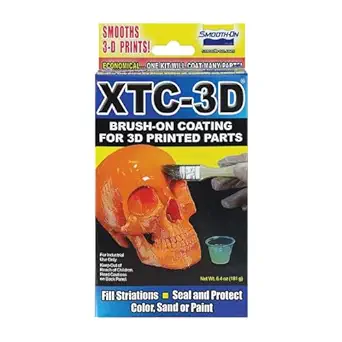
Enhance the finish of your 3D printed prototypes with Smooth-On XTC-3D™ 3D Print Coating & Smoothing Epoxy. Designed for high-detail projects, this clear topcoat smooths and strengthens prints, delivering a professional, impact-resistant surface that elevates presentation and durability for various 3D printing materials.
Compatible with SLA, SLS, PLA, ABS, Laywoo, and powder-printed parts, the epoxy features a simple 2A:1B mix ratio and a 10-minute working window for precise application. It cures to a hard, 80D Shore hardness finish in just 5 hours, self-leveling to eliminate brush strokes and provide excellent surface coverage.
5 hours, self-leveling to eliminate brush strokes and provide excellent surface coverage.
Pros
- Creates a hard, impact-resistant coating with an 80D Shore hardness, enhancing prototype durability.
- Versatile compatibility with multiple 3D printing materials including SLA, SLS, PLA, and ABS.
- Self-leveling formulation ensures a smooth, brush-stroke-free finish for professional results.
Cons
- Short 10-minute working time requires quick, confident application to avoid inconsistencies.
Ideal for users seeking to refine and protect intricate 3D prints, Smooth-On XTC-3D™ offers a straightforward solution for surface finishing. Its balance of easy application, fast curing, and lasting hardness makes it a top choice among best 3D printing solutions for high-detail prototypes.
9. MASTER BAMBU STUDIO 2026: The Essential Beginner’s Guide to Step-by-Step

MASTER BAMBU STUDIO 2026 offers a comprehensive, step-by-step guide designed specifically for beginners venturing into the world of 3D printing. This essential manual provides clear instructions and practical tips to master high-detail prototyping, making it an invaluable resource for anyone eager to excel in 3D printing technology.
Featuring easy-to-follow tutorials and expert insights, this guide covers fundamental techniques crucial for producing precise, high-quality prototypes. The book breaks down complex concepts, enabling users to confidently navigate 3D printing workflows and achieve professional-grade results, whether for personal projects or initial prototype development.
Pros
- Stepwise instructions tailored for beginners facilitate a smooth learning curve in 3D printing workflows.
- Focuses on producing high-detail prototypes, enhancing accuracy and finish quality for professional applications.
- Combines technical explanations with practical examples, bridging theory and hands-on practice effectively.
Cons
- Limited to beginner-level content; advanced users may find the depth insufficient for complex print projects.
MASTER BAMBU STUDIO 2026 is an ideal starting point for those aiming to master the best 3D printing solutions for high-detail prototypes. Its clear, accessible format supports users in achieving better results with confidence. While advanced users might seek more in-depth resources, beginners will find this guide an excellent foundation.
While advanced users might seek more in-depth resources, beginners will find this guide an excellent foundation.
10. ELEGOO ABS-Like Resin 3.0+, Upgraded 3D Printer Photopolymer Resin, Higher

ELEGOO ABS-Like Resin 0+ redefines high-detail 3D printing by delivering exceptional heat resistance and durability without compromising precision. Ideal for creating prototypes that demand fine details and mechanical strength, it offers a perfect balance of performance and efficiency for professionals and enthusiasts alike.
Ideal for creating prototypes that demand fine details and mechanical strength, it offers a perfect balance of performance and efficiency for professionals and enthusiasts alike.
Specially engineered to maintain stability up to 55°C, this photopolymer resin ensures that printed models retain their shape and strength under thermal stress. Its low shrinkage formula guarantees high accuracy with smooth surfaces, while fast curing optimizes printing speed on most LCD/DLP 3D printers using a 405nm UV light source.
Pros
- High heat resistance up to 55°C prevents deformation and material failure in demanding environments.
- Exceptional mechanical strength and impact resistance allow models to bend without cracking, supporting complex, durable prototypes.
- Fast curing time accelerates production while maintaining intricate surface details for professional-grade results.
Cons
- Priced slightly above standard resins, which may impact budget-conscious users.
ELEGOO ABS-Like Resin 0+ stands out as an excellent choice for those seeking the best 3D printing solutions for high-detail prototypes.
Its unique combination of durability, precision, and heat resistance makes it ideal for professional applications requiring reliable, fine-quality prints.
How to Choose the Best 3D Printing Solutions for High-Detail Prototypes
Print resolution and detail precision
Print resolution significantly influences the ability to replicate intricate designs and subtle textures with exceptional clarity. High resolution, defined by finer layer heights and smaller minimum feature sizes, ensures prototypes capture delicate details that are crucial for evaluating product aesthetics and function before final production.
Accuracy in XY axis movements is equally important, as even slight deviations can blur fine features, reducing overall precision. Models with smooth surface finishes directly from the printer minimize the need for labor-intensive postprocessing, saving time and preserving the integrity of complex geometries. Nozzle diameter plays a vital role as well: smaller nozzles offer better detail fidelity by allowing thinner extrusion lines, but may increase print time and require calibrated settings.
Nozzle diameter plays a vital role as well: smaller nozzles offer better detail fidelity by allowing thinner extrusion lines, but may increase print time and require calibrated settings.
Support for advanced slicing software expands customization, enabling optimized settings such as variable layer heights and adaptive infill that enhance detail without unnecessary material use. Together, these factors create the foundation for producing highly accurate, visually appealing prototypes that closely match design intentions and performance criteria. This level of control is essential for evaluating fine mechanical parts, jewelry models, or intricate architectural elements where every micron counts.
This level of control is essential for evaluating fine mechanical parts, jewelry models, or intricate architectural elements where every micron counts.
Advanced control features and software integration
Seamless integration with advanced software and real-time control capabilities significantly elevate the precision and efficiency of prototype production. High-detail models demand compatibility with sophisticated CAD and slicing programs that allow intricate designs to be translated flawlessly into printable instructions, minimizing errors and optimizing print quality.
Real-time monitoring and adjustment features enable users to oversee every stage of the printing process, quickly correcting issues such as layer misalignment or temperature fluctuations without halting production. Connectivity options including USB, WiFi, and cloud support facilitate a streamlined workflow, allowing designs to be sent, managed, and monitored remotely, which is vital for fast-paced development environments.
Automated calibration and leveling systems ensure that the printer’s bed and extruder maintain perfect alignment, reducing setup time and improving repeatability for consistent high-detail outcomes. Additionally, support for multimaterial or dual extrusion printing expands creative possibilities by enabling complex color schemes or material properties within a single prototype, essential for functional and aesthetic validation of intricate parts.
Material compatibility and quality
The choice of compatible and high-quality materials significantly influences the accuracy and durability of detailed prototypes. Different printing technologies rely on a variety of resins and filaments, each offering unique characteristics such as rigidity for structural integrity, flexibility for moving parts, or transparency for visual clarity, which are essential for replicating real-world properties in prototypes.
Access to specialized materials like photopolymer resins allows for ultra-fine layer resolution and smooth surface finishes, while composite filaments infused with carbon fiber or metal powders provide enhanced strength and functional testing capabilities. Ensuring that these materials are readily available and suited to the intended prototype’s requirements helps avoid compromises in detail and functionality.
Moreover, many high-detail materials require precise storage conditions to prevent moisture absorption, which can lead to printing defects. Proper drying and sealed packaging are critical to maintaining consistency in the feedstock—any variation can cause interruptions or quality degradation during printing.
Maintaining uninterrupted material feed and stable physical properties ensures prototypes are produced with consistent dimension accuracy and surface quality, saving time and reducing costly reprints.
Print volume and build chamber design
Build volume and chamber design fundamentally determine the size, quality, and reliability of printed prototypes. A sufficiently large build volume ensures the ability to produce prototypes that meet dimensional requirements without segmenting the model, which is essential for detailed and functional parts. Opting for enclosed chambers over open-frame designs promotes environmental stability by maintaining consistent temperature and reducing exposure to dust or drafts, both critical factors for preventing warping and achieving dimensional accuracy.
Accessible print beds simplify prototype removal, minimizing the risk of damage during extraction, which is especially important for intricate designs. Features like modular or removable build plates enable quick swapping between ongoing projects, streamlining workflow and increasing printer uptime.
Moreover, maintaining stable chamber temperatures throughout the print cycle helps reduce internal stresses and material shrinkage, crucial for high-fidelity reproductions using materials sensitive to temperature fluctuations, such as ABS or certain resins.
In practice, a 3D printer with a spacious, enclosed build chamber and a removable heated bed allows seamless production of medium to large prototypes with precise detail retention. This design approach also supports controlled cooling rates and protects prints from environmental variables that could compromise structural integrity, making the entire prototyping process more efficient and reliable.
Precision temperature and environmental controls
Maintaining stable and accurate temperature controls is essential for achieving the fine detail and consistency required in high-precision 3D printing projects.
The ability to regulate nozzle and heated bed temperatures with high accuracy prevents common defects such as warping, poor layer adhesion, and uneven material flow. A heated build platform, combined with precise control over its temperature, ensures that printed layers cure correctly and adhere firmly, which is critical for delicate geometries and complex prototypes. Without this stability, slight fluctuations can cause misalignments or weak spots that compromise the overall quality of the print.
Without this stability, slight fluctuations can cause misalignments or weak spots that compromise the overall quality of the print.
Advanced printers often include enclosed heated chambers that maintain a controlled environment to minimize thermal gradients and reduce the risk of material deformation during printing. Environmental controls such as ozone filters help manage the air quality, especially important when printing with specialized or sensitive materials that may release fumes. Integration of sensors throughout the machine continuously monitors temperature and humidity levels, enabling real-time adjustments to optimize conditions.
This sensor feedback loop not only enhances material curing and layer bonding but also increases repeatability and reduces failed prints, making it indispensable for producing high-detail prototypes with precision and reliability.
Frequently Asked Questions (FAQs)
How Can I Ensure The Accuracy And Surface Finish Of A High-Detail Prototype When Choosing A Printer?
To ensure accuracy and a smooth surface finish in a high-detail prototype, choose a printer with a fine layer resolution—typically around 25-50 microns—and compatible with resins or materials known for detail retention, like SLA or DLP printers. Also, look for models with precise motion control and consider post-processing methods such as sanding or resin curing to enhance the final finish.
Are There Specific Printers Recommended For Producing Small, Intricate Prototype Parts?
For small, intricate prototype parts, resin-based SLA or DLP printers like the Formlabs Form series or Anycubic Photon are highly recommended due to their high resolution and fine detail capabilities. These printers can achieve layer heights as low as 25-50 microns, making them ideal for precise, detailed work. Avoid standard FDM printers if detail and surface finish are critical.
Can Post-Processing Techniques Improve The Detail And Quality Of Printed Prototypes, And Which Are Most Effective?
Yes, post-processing techniques like sanding, priming, and painting can significantly enhance the detail and surface quality of printed prototypes. Vapor smoothing (for materials like ABS) is especially effective at creating a polished, seamless finish, while applying clear coats can improve durability and visual appeal. Combining these methods based on your prototype’s material and purpose usually yields the best results.
Which Materials Provide The Finest Detail And Durability For Prototype Printing?
For prototype printing that demands fine detail and durability, materials like resin (used in SLA or DLP printers) excel due to their high resolution and smooth finish. Additionally, engineering-grade thermoplastics such as ABS or Nylon offer robust mechanical properties and good surface quality, making them ideal for functional prototypes. Choosing between these depends on whether you prioritize intricate detail or toughness.
What Types Of Printing Technologies Are Best Suited For Creating High-Detail Prototypes?
For high-detail prototypes, resin-based technologies like SLA (Stereolithography) and DLP (Digital Light Processing) are best, as they offer fine layer resolutions often below 50 microns. These methods produce smooth surfaces and sharp details, ideal for intricate designs and precise features. Avoid FDM if you need ultra-fine detail, as it typically has rougher finishes and lower resolution.
Conclusion
In summary, the best 3D printing solutions for high-detail prototypes deliver exceptional precision, intricate detailing, and rapid turnaround times that accelerate product development. Their ability to produce complex designs with accuracy makes them invaluable tools for innovators across industries. Embracing these advanced printing technologies empowers creators to bring visionary concepts to life and stay ahead in a competitive market.
Embracing these advanced printing technologies empowers creators to bring visionary concepts to life and stay ahead in a competitive market.