

Filament tension control, spool alignment accuracy, and automated rewinding mechanisms are critical parameters when selecting the best 3d printed filament respooler. As additive manufacturing advances, efficient filament management solutions become indispensable for reducing material waste and maintaining consistent extrusion during prolonged print jobs.
Innovations in compact motor design, sensor feedback loops, and modular construction contribute to the evolving landscape of respooling technology, addressing common issues such as tangling and filament snapping. Understanding the underlying mechanics and performance criteria of these devices is essential for maximizing the lifespan and utility of 3D printing materials.
Delving deeper into the features that define the best 3d printed filament respooler reveals compelling engineering breakthroughs poised to transform routine filament management.
Tame Your Spools: Explore the Best 3D Printed Filament Respoolers!
| Image | Product | Price |
|---|---|---|
Our Pick 1 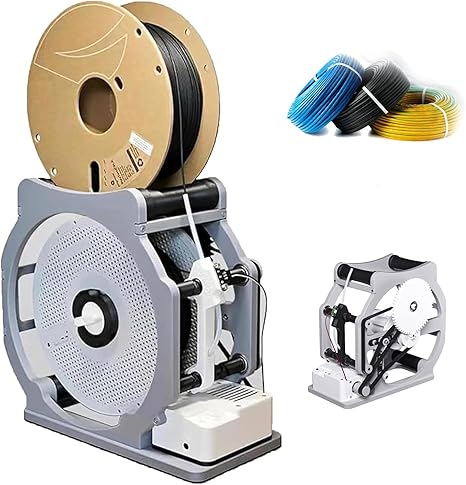 | Electric 3D Filament Respooler, 3D Industrial Filament Respooler Machine, Automatic | Check Price On Amazon |
Our Pick 2  | 3D Industrial Filament Respooler – Heavy Duty 3D Printer Spool | Check Price On Amazon |
Our Pick 3 | 3D Industrial Filament Respooler Machine, 3D Printer Winder Machine for | Check Price On Amazon |
1. Electric 3D Filament Respooler, 3D Industrial Filament Respooler Machine, Automatic
Experience effortless filament management with the Electric 3D Filament Respooler, a smart and fully automatic solution designed for creators who demand precision and efficiency. This industrial-grade machine streamlines 3D filament rewinding, eliminating tangles and reducing waste, making it indispensable for any serious 3D printing enthusiast or professional.
Equipped with an intelligent filament detection sensor, the respooler automatically starts and stops to prevent overfilling and material tangles. Customizable controls allow adjustment of speed, tension, motor direction, and lighting, while firmware updates keep your device current. Its robust frame and smooth winding motor ensure compatibility with various filament types, including PLA, ABS, PETG, and TPU.
Pros
- Automated start/stop sensor prevents filament tangles and wasted material for seamless operation.
- Programmable settings provide full control over winding speed, tension, motor direction, and lighting to match specific project requirements.
- Durable build with reinforced frame and intelligent motor enables consistent, even winding across a wide range of filament types.
Cons
- The device’s industrial design may take up more workspace compared to simpler manual spoolers, potentially limiting portability for some users.
For creators seeking a reliable, automated filament respooler that balances durability with advanced customization, this model stands out as an excellent choice. Its precision and versatility cater to both hobbyists and professionals, simplifying filament handling and improving workflow efficiency in any workshop or studio environment.
2. 3D Industrial Filament Respooler – Heavy Duty 3D Printer Spool
Experience seamless filament management with the 3D Industrial Filament Respooler – a heavy-duty spool designed to streamline your 3D printing workflow. Whether transferring filament, wire, or thread, it guarantees efficiency, reduces tangling, and enhances productivity for makers and professionals alike.
Crafted for versatility, this spool respooler supports various materials including PLA and ABS filaments, welding wire, and sewing thread, accommodating spools up to 20 cm in diameter. Its durable reinforced frame coupled with adjustable tension control ensures smooth winding, while dual power options—manual handle or drill attachment—offer flexible operation for diverse applications.
Pros
- Effortlessly transfers filament and other materials, preventing tangling and saving valuable time during spool changes.
- Compatible with multiple spool types and materials, making it suitable for 3D printing, welding, sewing, and other crafting tasks.
- Robust construction and adjustable tension deliver consistent winding quality for professional-grade results every session.
- Dual power methods—with an included manual handle and a drill-adaptable quick reel—offer versatile control tailored to user preferences.
- Compact, space-saving design fits comfortably in workshops, studios, and home setups without clutter.
Cons
- Priced at a premium level, which may be a consideration for casual users or beginners on a tight budget.
Ideal for 3D printing enthusiasts and professionals seeking reliable filament management, this heavy-duty respooler balances durability and versatility. It outperforms basic spool holders by offering tension control and dual powering options, making it a smart investment for smooth, hassle-free filament respooling.
3. 3D Industrial Filament Respooler Machine, 3D Printer Winder Machine for
Transform your filament management with the 3D Industrial Filament Respooler Machine, designed to deliver efficient, tangle-free winding for a wide range of 3D printing materials. Whether for professional or hobby use, this spooler streamlines your workflow, ensuring smooth filament handling every time.
Compatible with spools up to 8 inches in diameter, it handles PLA, ABS, PETG, TPU, and more with ease. Its reinforced frame and adjustable tension guarantee consistent winding quality, while dual power options—manual or drill-driven—offer versatile operation tailored to your setup.
Pros
- Wide material compatibility supports diverse filament types and thicknesses, ideal for varied 3D printing projects.
- Dual power modes provide flexibility: manually crank with the included handle or connect a drill for faster operation.
- Robust design with tension control ensures even, professional-grade spooling that minimizes filament tangling and damage.
Cons
- Some users report mixed experiences regarding ease of assembly and operational smoothness, indicating a possible learning curve.
Overall, the 3D Industrial Filament Respooler Machine is a reliable, adaptable tool for anyone looking to enhance filament handling efficiency. Its versatile features make it well-suited for makers, crafters, and professionals seeking to reduce filament waste and improve print preparation.
4. 3D Printing Filament respooler — Smart Electric | Auto Winding,

Streamline your 3D printing workflow with the 3D Printing Filament Respooler — Smart Electric | Auto Winding. Designed to significantly reduce manual effort, this smart device ensures neat, consistent filament spooling, preventing tangles and feeding issues for a smoother printing experience every time.
This electric filament respooler offers adjustable tension control (5-5N) to accommodate various filament types such as PLA, PETG, TPU, and ABS, maintaining optimal tightness without damaging delicate materials.
Compatible with spool sizes from 50mm to 100mm inner diameter and both 75mm and 3mm filaments, it supports a wide range of printing needs effortlessly.
Pros
- Smart automatic winding reduces manual labor by up to 90%, completing a full 1kg filament spool in just 5 minutes.
- Adjustable tension settings protect flexible filaments like TPU from stretching and prevent breakage in rigid materials such as ABS.
- Built-in anti-overload protection safeguards the motor by stopping operation when the spool is full or if an obstacle is detected.
- Compact and lightweight (under 2kg) with USB or AC adapter power options, making it highly portable for use at home, studio, or on-site.
Cons
- Price point at $93 may be a consideration for hobbyists with very limited budgets.
Offering a perfect balance of automation, precision, and portability, this filament respooler is ideal for both casual 3D printing enthusiasts and professionals. Its versatility and protective features ensure consistent filament quality, enhancing overall print reliability and reducing filament waste.
5. GOWENIC 3D Printer Filament Respooler Hand Cranked 1kg Filament Rewinder,
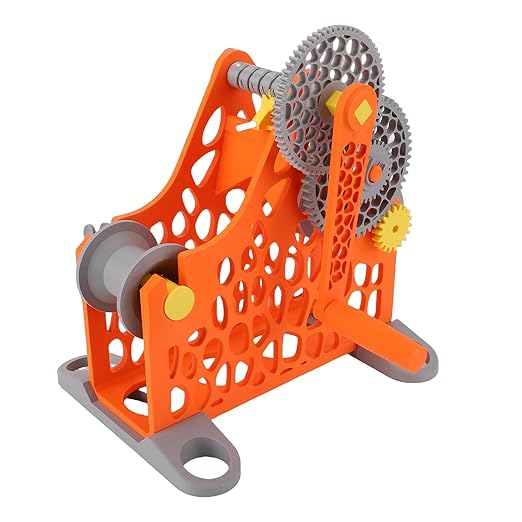
Effortlessly manage and organize your 3D printing filaments with the GOWENIC 3D Printer Filament Respooler Hand Cranked 1kg Filament Rewinder. Designed to reduce tangling and save valuable time, this manual respooler ensures neat, consistent winding for hobbyists and professionals alike, making filament storage smooth and efficient.
Featuring a robust hand crank supporting up to 1kg spools, the GOWENIC respooler offers quick and tidy transfer of filaments, wires, cables, or threads between different spool sizes. Its portable, modular design simplifies alignment for straight winding, suitable across diverse applications including 3D printing, welding, and textile crafts.
Pros
- Supports spools up to 1kg, enabling efficient batch rewinding and storage of leftover filament with minimal effort.
- Hand crank design grants precise, controlled winding that reduces filament entanglement and preserves material integrity.
- Compact and portable with a central handle and modular components for easy adjustment to various spool sizes and materials.
Cons
- Manual operation may require physical effort and time compared to motorized respoolers for large volume users.
Ideal for both personal and industrial use, the GOWENIC 3D Printer Filament Respooler offers reliable, user-friendly winding that enhances filament management. Its straightforward design balances portability and performance, making it a smart choice for anyone seeking to maintain filament quality and order.
6. 2026 New Official CREALITY Space Pi Filament Dryer Plus, 2

Optimize your 3D printing workflow with the 2026 New Official CREALITY Space Pi Filament Dryer Plus. Designed to handle two 1 kg spools simultaneously, it offers efficient moisture removal through advanced heating technology, ensuring superior filament quality and consistent print results every time.
This filament dryer features a double PTC 360° hot-air circulation system powered by a unique 160W PTC heater that delivers uniform and eco-friendly drying. Its one-key preset supports 12 filament types, easily controlled via a user-friendly 4-inch LCD touchscreen.
Pros
- Dual roll capacity with four filament holes and two PTFE pipes allowing simultaneous drying for multiple printers.
- Advanced PTC heating technology provides even, energy-efficient 360° hot air circulation for consistent moisture removal.
- Intuitive 4-inch touch screen with one-key presets for 12 filament types and adjustable temperature control from 45°C to 70°C.
Cons
- The unit’s size and dual capacity may require additional space consideration in smaller work areas.
The Space Pi Filament Dryer Plus from CREALITY is an indispensable tool for hobbyists and professionals seeking consistent, high-quality prints. Its robust, versatile drying capabilities and user-friendly interface make it an excellent investment for maintaining filament integrity and enhancing print reliability.
7. 3D Filament Respooler, Electric Spool Winder & Automatic Filament Rewinder

Experience seamless filament management with the 3D Filament Respooler, an electric spool winder designed for precision and ease. Intelligent automation eliminates manual effort, allowing creators to recycle and respool filament effortlessly while maintaining optimal tension for all material types.
Featuring an auto-sensing system, this filament rewinder starts and stops automatically to prevent overruns and tangles. Its adjustable tension control and compatibility with a variety of 75 mm filaments, including delicate TPU and nylon, make it indispensable for any 3D printing setup or workshop.
75 mm filaments, including delicate TPU and nylon, make it indispensable for any 3D printing setup or workshop.
Pros
- Smart auto-sensing operation initiates and halts spool winding instantly, reducing user intervention and filament waste.
- Adjustable tension control ensures consistent tightness between 0.5–5 N, protecting filament integrity during rewinding.
- Universal spindle supports spools with 2–4 inch inner diameters and handles diverse materials beyond 3D filaments, including welding wire and sewing thread.
- Compact design with quiet, durable ABS construction and dual power options (USB or AC) offers versatility for home or professional use.
- Built-in overload protection enhances safety, while straightforward assembly and intuitive controls cater to users of all experience levels.
Cons
- The spooler’s weight under 4.4 lb may impact stability with very large or unusually heavy spools during high-speed winding.
Ideal for makers, repair shops, and 3D printing studios, the 3D Filament Respooler simplifies filament handling and helps maintain spool quality. Its automated features and universal compatibility distinguish it from manual or less adaptable rewinders, making it a practical investment for efficient workflow.
8. 3D Printer Filament Respooler – Electric Filament Spool Rewinder with

Manage your 3D printing filament effortlessly with the 3D Printer Filament Respooler by Aswdbbn. This electric spool rewinder speeds up the process of tidying loose or used filament, preventing tangles while keeping your printing materials organized and ready for use. It’s an essential tool for serious makers and professionals alike.
Equipped with a smart start/stop feature, the respooler offers smooth and automated spool rotation, eliminating manual handling. Compatible with popular filament types such as PLA, ABS, PETG, and TPU, it accommodates various spool sizes.
Its durable motor and sturdy build ensure consistent performance during frequent rewinding tasks.
Pros
- Efficient electric rewinding mechanism reduces tangled filament, enhancing print readiness and workflow efficiency.
- Smart start/stop control provides seamless spool handling without manual intervention, perfect for both hobbyists and professionals.
- Universal compatibility supports multiple filament materials and spool sizes, delivering versatile use across different 3D printing projects.
Cons
- Premium price point may be a consideration for casual users or beginners with limited filament management needs.
The 3D Printer Filament Respooler by Aswdbbn stands out as a reliable accessory to maintain filament quality and organization. Streamlining your workspace and reducing material waste, it’s an ideal addition for makers aiming for professional-level print preparation.
9. Electric 3D Filament Respooler,Filament Spool Winder for 20cm Spools with

Streamline your 3D printing workflow with the Electric 3D Filament Respooler, designed to deliver consistent, professional winding for spools up to 20cm. Its reinforced frame and adjustable tension control combine durability with precision, ensuring seamless filament management that enhances both efficiency and organization.
This spool winder comes fully pre-assembled, featuring 20 precision bearings, linear guides, and a reliable 12V adjustable power supply. Capable of splitting large 3kg filament rolls into convenient 1kg spools, it supports manual or electric operation for versatile use across various filament types like PLA, ABS, PETG, and TPU.
Pros
- Adjustable tension system ensures smooth and even winding, minimizing filament tangles and breakage.
- Dual operation modes—electric or manual—offer flexibility to suit different handling preferences and work environments.
- Compatible with a wide range of filament materials and spool sizes up to 20cm, broadening its application scope.
Cons
- At 6.34 pounds, it may not be the lightest option for frequent portability despite its compact size.
Offering a powerful combination of reliability and adaptability, the Electric 3D Filament Respooler is ideal for hobbyists and professionals looking to optimize filament storage and reduce winding time. Its robust build and ease of use make it a valuable addition to any 3D printing workspace.
10. Motorized 3D Filament Respooler, Electric Spool Rewinder, Smart Start and

Effortlessly manage your 3D printing filament with the Motorized 3D Filament Respooler from VAXYOR, designed to deliver precision and efficiency. Its smart start-stop system and robust construction make rewinding neat spools easy, saving time and preventing filament waste during your creative projects.
Equipped with a high-precision sensor, this electric spool rewinder automatically engages when filament is loaded and stops as soon as the spool is empty, protecting the motor and ensuring hands-free operation. The synchronized belt tension system eliminates tangling, while the durable ABS frame and 19 precision bearings guarantee long-lasting, smooth performance.
Pros
- Smart start-stop feature with real-time filament monitoring prevents motor burnout and idle spinning, enhancing device longevity.
- Synchronized belt tension system ensures perfectly wound spools, reducing filament jams and interruptions during printing.
- Robust H-frame made from high-strength ABS and 19 precision bearings minimize friction, providing stable, smooth operation under heavy use.
- Compatible with 99% of 1kg filament spools and standard materials such as PLA, PETG, and ABS, offering versatile usability.
- Compact and space-saving design integrates neatly into workspaces, ideal for 3D printing enthusiasts seeking efficient filament organization.
Cons
- The price point may be higher than some manual spoolers, which could be a consideration for budget-conscious users.
Overall, the Motorized 3D Filament Respooler is a reliable tool for anyone looking to streamline filament management with minimal effort. Its precision engineering and smart features make it a valuable asset for maintaining filament quality and enhancing print reliability, especially for dedicated 3D printing enthusiasts.
How to Choose the Right Best 3D Printed Filament Respooler
Safety and protective features
Effective safety mechanisms are essential to protect both the user and the longevity of the device’s components, especially in equipment involving moving parts and motors.
Overload protection safeguards the motor from burnout by automatically cutting power when excessive tension or resistance occurs, which helps avoid costly damage and downtime. Safety covers or guards around rotating or sliding elements prevent accidental contact, reducing the risk of injury during operation.
Features like an emergency stop button or a quick-release mechanism allow immediate intervention if a problem arises, such as a filament jam or unexpected motor strain, minimizing injury risk and equipment damage. Incorporating these protective elements demonstrates thoughtful engineering that prioritizes user safety and device durability, making the overall experience smoother and more reliable. These technical safeguards collectively enhance operational confidence and help maintain consistent filament management performance over time.
These technical safeguards collectively enhance operational confidence and help maintain consistent filament management performance over time.
Power and performance features
Consistent filament tension is essential for achieving smooth, tangle-free respooling, which heavily depends on the motor type and torque of the device. A high-torque motor ensures steady rotation and prevents filament slack, avoiding snags or breakage that can disrupt the entire printing workflow.
Adjustable speed settings allow users to tailor the respooling process according to different filament materials and spool sizes, controlling the winding rate to minimize stress and maintain spool integrity. This flexibility is especially important when handling delicate or specialty filaments that require gentle handling.
Quiet operation is another key feature, as many users work in shared home offices or quiet studio environments where excessive noise can be distracting. Devices designed with noise reduction in mind provide a more comfortable experience, enabling longer respooling sessions without disturbance.
Additionally, versatile power options such as USB connectivity, battery power, or AC adapters enhance portability and convenience, allowing the respooler to be used in various settings without reliance on a fixed power source.
Material quality and build durability
Durability and material quality profoundly influence the reliability and lifespan of filament respoolers, as these devices must withstand continuous mechanical stress and environmental exposure. A frame constructed from high-strength polymers or metals offers essential rigidity and resistance to deformation, ensuring that the respooler maintains precise alignment even after prolonged use.
This structural integrity is vital for consistent spool rotation without wobbling, which prevents filament tangling and printing interruptions.
Equally important are the moving parts like bearings and rollers, which require precision engineering from robust materials to handle frequent motion smoothly. High-quality bearings reduce friction and wear, minimizing noise and preventing premature failure, while durable rollers maintain grip on diverse spool sizes without damaging the filament. Such components directly impact operational efficiency and user experience during extended 3D printing sessions.
Resilience to environmental factors also plays a crucial role: corrosion-resistant coatings and moisture-proof materials protect the respooler against humidity and dust, common in workshop settings. This prevents rust and material degradation that could impair mechanical functionality over time. Together, these material qualities and build considerations ensure the device remains dependable, precise, and maintenance-friendly through heavy usage cycles.
Ease of use and maintenance
Streamlined operation and straightforward upkeep significantly enhance the overall printing experience by minimizing downtime and frustration.
Features like simple spool loading and unloading mechanisms reduce the effort and time required to replace filament, allowing users to quickly swap spools without struggling with complicated locks or clamps. Tool-free adjustments and calibration options further contribute by enabling precise tension and alignment tweaks without needing specialized tools, which ensures smooth filament flow and consistent print quality.
Moreover, easy access to filament paths and rollers facilitates routine cleaning and maintenance, preventing jams and buildup that can degrade filament performance over time. User-friendly controls equipped with clear indicators enhance operational clarity, guiding users through the respooling process with intuitive buttons or displays. These aspects collectively ensure that managing filament spoolers remains efficient and hassle-free, catering to both beginners and experienced makers who prioritize reliability and smooth workflow.
Spool capacity and compatibility
Spool capacity and compatibility are fundamental to ensuring efficient and hassle-free filament management during respooling tasks. If a respooler cannot accommodate the maximum diameter and width of the filament spools typically used, it can lead to interruptions, improper winding, or even damage to the filament.
Supporting a broad range of spool sizes means users can work seamlessly with different brands and filament types without constantly swapping equipment.
Many popular filament spools vary in diameter, often ranging between 150mm to 200mm, with widths spanning 50mm to 80mm or more; having adjustable spool holders that adapt to these dimensions prevents slippage and ensures the spool remains secure throughout the respooling process. Compatibility with both common and less standard spool formats allows greater flexibility, especially for users experimenting with various filament materials.
Additionally, a respooler’s weight capacity and balance must handle the full spool’s load to facilitate smooth and even winding. Handling heavier spools without tilting or dragging reduces tension inconsistencies, thereby preserving filament integrity and preventing tangles or breaks during transfer. A well-designed spool holder system that combines size versatility with sturdy support ultimately maximizes efficiency and protects your filament investment.
Frequently Asked Questions (FAQs)
How Easy Is It To Assemble And Use A Typical Printed Filament Respooler?
Assembling a typical printed filament respooler is fairly straightforward, often requiring just a few screws and basic tools, with clear instructions provided. Using it is intuitive—simply mount the spool on the rotating arm and adjust tension as needed to prevent tangling during filament rewinding. For best results, start at a slow speed and gradually increase to maintain even winding.
Can A Printed Filament Respooler Help Prevent Tangling And Improve Print Reliability?
Yes, a printed filament respooler can help prevent tangling by keeping the filament neatly wound and reducing slack during printing. This consistent tension improves print reliability by minimizing feed issues and ensuring smooth extrusion. For best results, pair the respooler with a properly calibrated feeder and place it on a stable surface.
Are There Any Maintenance Tips To Ensure The Longevity And Optimal Performance Of A Printed Filament Respooler?
To keep your printed filament respooler running smoothly, regularly clean the bearings and moving parts to prevent dust buildup and ensure smooth rotation. Lubricate any metal components with a light machine oil every few months, and store the device in a dry, dust-free environment to avoid rust and damage.
What Features Make A Printed Filament Respooler The Best Choice For Maintaining Filament Quality?
The best printed filament respooler should offer consistent tension control to prevent filament tangling and ensure even winding. It should also include features like adjustable spool holders to fit various spool sizes and a smooth rotation mechanism to maintain filament integrity during the respooling process. Additionally, dust covers or enclosures help protect the filament from moisture and contaminants, preserving print quality.
Which Types Of Filament Spools Are Compatible With Most Printed Filament Respoolers?
Most printed filament respoolers are compatible with standard 1 kg spools that have a center hole diameter of about 50-55 mm and a spool width around 50 mm. Look for spools that match these dimensions to ensure smooth mounting and rewinding during use. Avoid unusually sized or proprietary spools, as they may not fit securely or rotate properly.
Conclusion
In summary, the best 3d printed filament respooler offers efficient filament management, reduces tangling, and promotes a smoother printing process. Its versatility makes it an essential tool for maintaining filament quality and ensuring consistent print results. Embracing this innovative accessory can significantly improve your 3D printing experience and help you achieve greater precision and reliability with every project.
Embracing this innovative accessory can significantly improve your 3D printing experience and help you achieve greater precision and reliability with every project.